How to Cut Costs by Reviewing Your Packaging Materials | Castle Industrial
Skip to content

Back to blog

HOW TO CUT COSTS BY REVIEWING YOUR PACKAGING MATERIALS

Ellie's headshot

Written by

ELLIE CHALMERS

Packaging

Table of Contents

Estimated read time: 22 mins

INTRODUCTION

Packaging spend rarely arrives as one large line item. It builds across pallet wrap, cartons, void fill, tape, strapping and the labour needed to apply them. By the time it reaches a budget review it can be difficult to see where the money is actually going.

You’ll know your own operation well, so this isn’t a guide to buying cheaper materials. Cutting specification or using less of everything often moves cost out of the packaging budget and into damage claims, returns and rework. A more reliable way to reduce packaging costs is to identify where inefficiencies sit and make changes that can be tested before they are rolled out.

This article covers six areas: materials, waste, pallet wrapping, packing processes, the true cost of damage, and how a structured packaging review brings them together.

1. REVIEW YOUR CURRENT PACKAGING MATERIALS

A packaging review should start with the materials themselves. Specifications are often set when a product is first shipped and are rarely revisited, even as products, pack sizes, transport routes and suppliers change.

For each material in use, it helps to ask three questions:

  • Is it suitable for the application? A material that performs well on one product may be unnecessary, or inadequate, on another.
  • Are you using more than the load needs? Extra layers, oversized cartons and heavy-duty grades used as a default can all add cost without adding protection.
  • Could a different specification deliver the same performance? Alternative thicknesses, constructions or grades may achieve the same result at a lower cost per pallet.

The aim is to assess packaging materials on suitability, performance and cost together. A lower unit price only means something if the material protects the product in the same way.

Material What to Review Possible Opportunity
Pallet wrap Gauge, grade, film consumption per pallet Alternative specification, or enhanced wrapping or stacking method
Cartons and boxes Size against product, strength rating Right-sizing to reduce material and void
Void fill Volume used per pack, type of fill Matching fill to product fragility
Tape and strapping Application method, quantity per pack Fewer applications where stability allows

2. IDENTIFY OPPORTUNITIES TO REDUCE PACKAGING WASTE

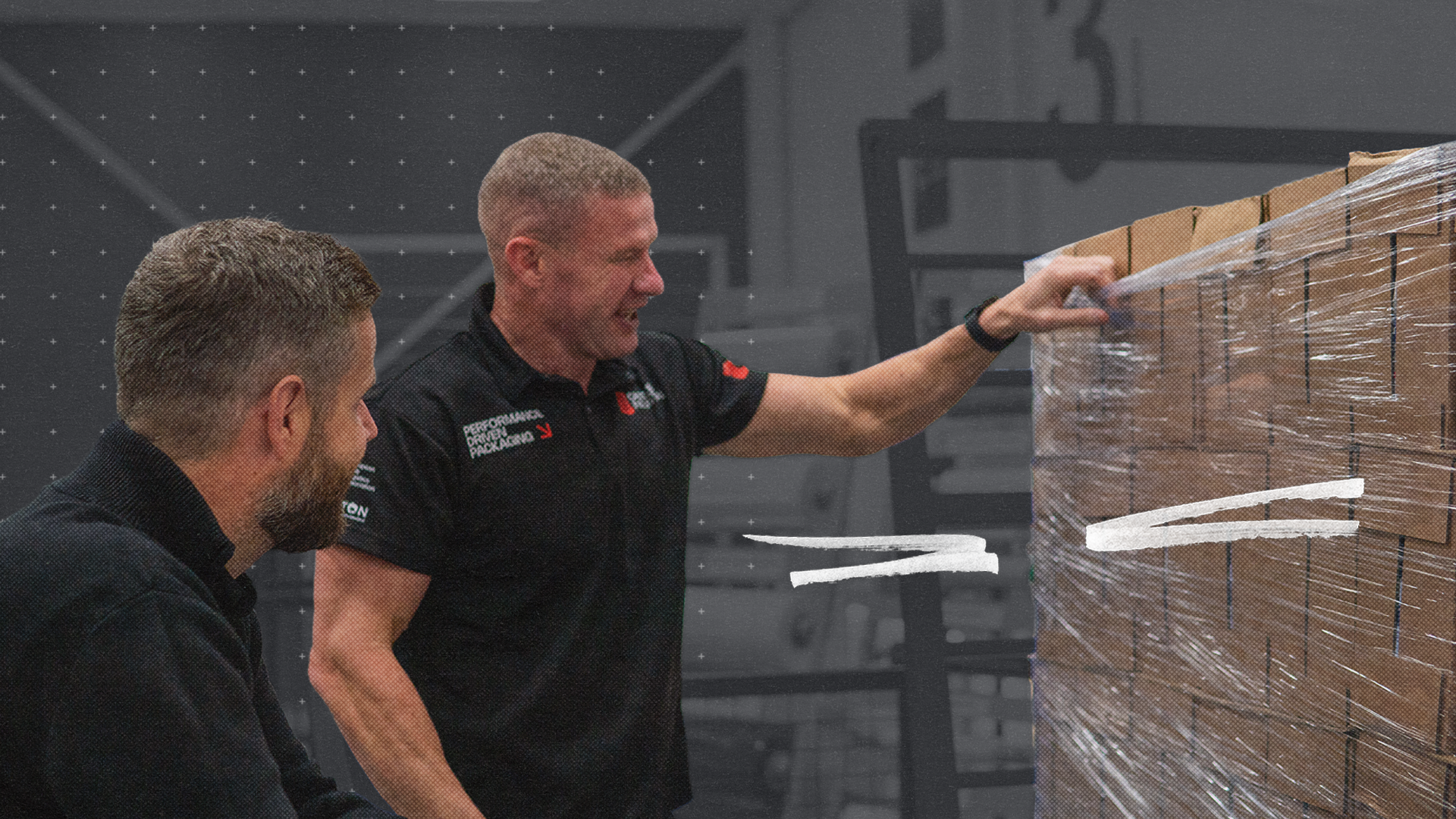
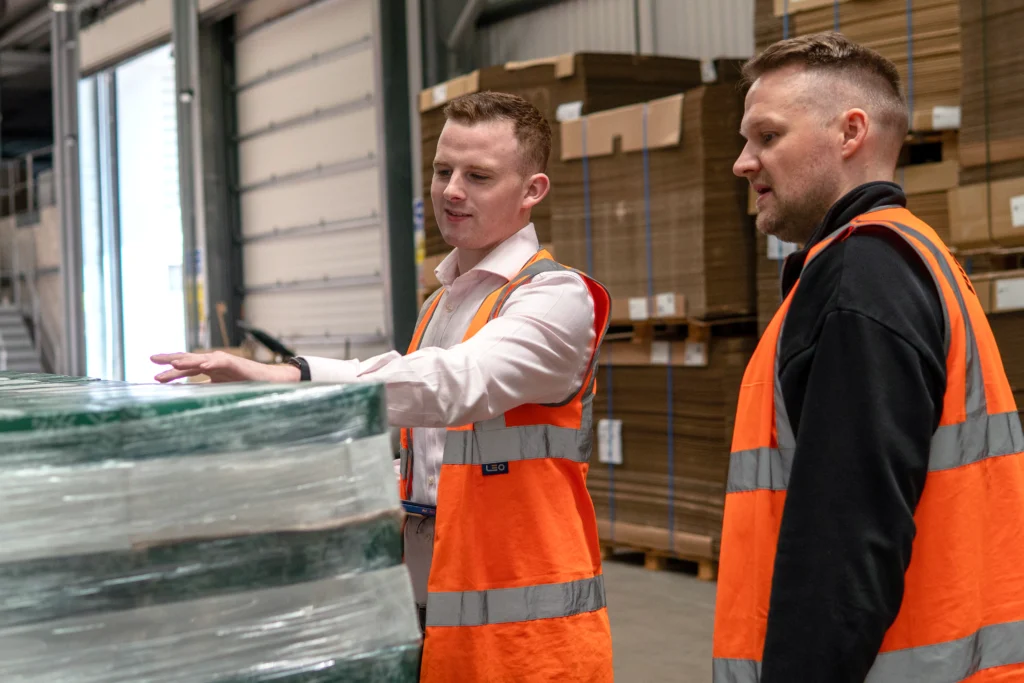
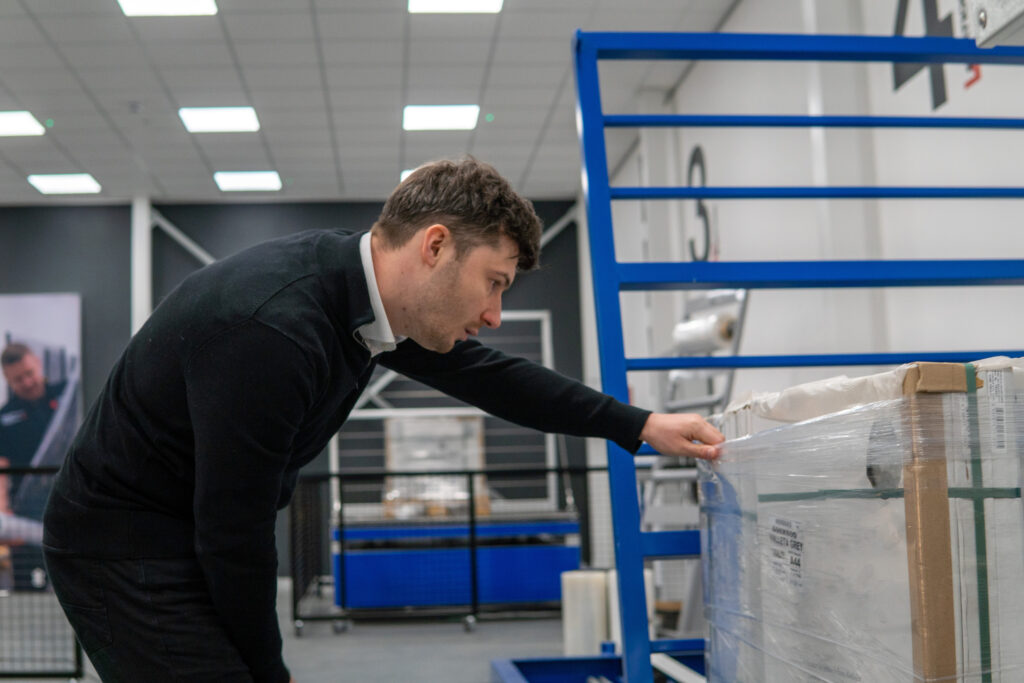
Two Packaging Specialists examining wrapped pallet in a warehouse

Waste in a packaging operation is rarely obvious, because much of it looks like normal practice. Walking the line with fresh eyes tends to bring opportunities into view.

Common areas to check include:

  • Packaging components that serve no clear purpose, such as a second layer of protection that duplicates the first.
  • Excess material applied out of habit rather than need.
  • Off-cuts, partially used rolls and damaged stock discarded before use.
  • Packaging that is removed and thrown away at the point of receipt.
  • Over-specified materials used on lighter or more stable loads.

This is also where the opportunity to reduce plastic packaging sits. Reducing consumption is worthwhile for cost and for environmental performance, but the order matters: confirm what the load needs first, then look at how much material is being used to deliver it.

The principle is straightforward. Reduce consumption where it is not contributing to protection, and leave it alone where it is.

Not sure where to start? Book a packaging audit and have your materials reviewed by our experts.

3. OPTIMISE YOUR PALLET WRAPPING PROCESS

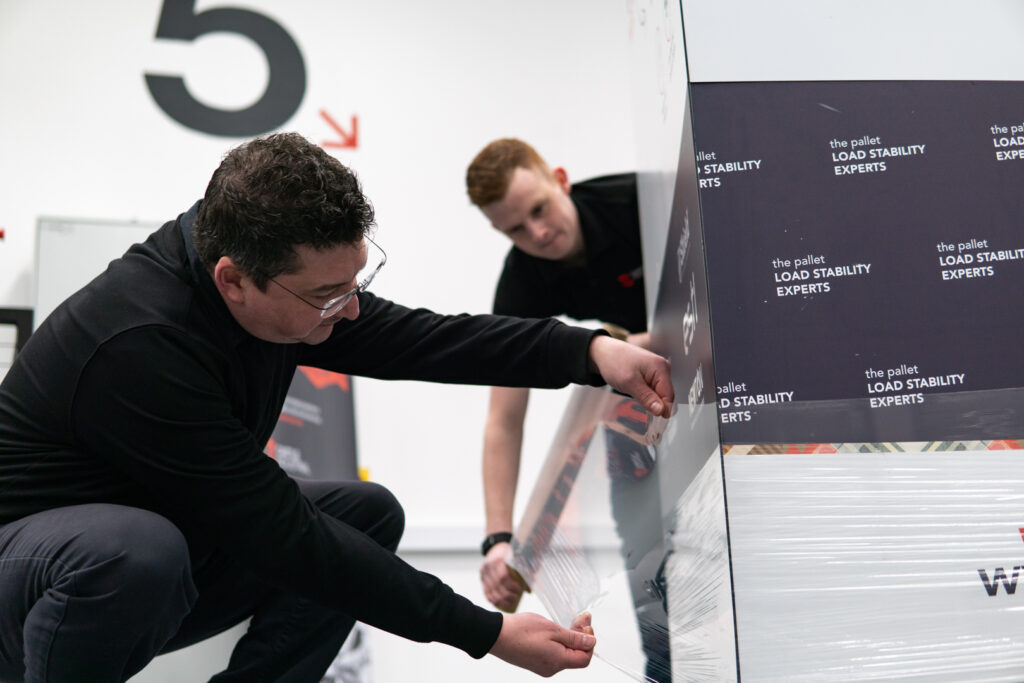
Paul and Tristan checking hand pallet wrap tension around a stacked pallet

For many warehouses, pallet wrap is one of the largest and most repeatable packaging costs, which makes it one of the most productive places to look.

Start with the basics:

1. Film specification. Check the film performance against what the load requires to be secure, not what was ordered last time.

2. Film consumption per pallet. Many operations know their cost per roll, but not their cost per wrapped pallet.

3. Machine settings. Pre-stretch levels, tension, RPM, and number of wraps at the base vs the top all influence both consumption and containment.

4. Applied stretch. It pays to measure the stretch percentage of the film once it’s been applied to your pallet. Without this, you’re wrapping blind.

BALANCING PALLET WRAP REDUCTION WITH LOAD STABILITY

It’s tempting to treat plastic material reduction as a straightforward win, but using less pallet wrap doesn’t automatically mean a more efficient wrapping operation.

Film consumption and load stability are directly linked. Warehouses that reduce pallet wrap without understanding the effect on loads stability will likely face pallets collapsing in transit, which costs far more than any initial cost saved on film.

The safer approach is to test before changing. Simulation testing at Castle’s Test Centre allows a proposed change in film or machine settings to be assessed against your actual load before it is adopted.

If you are considering a change to your wrapping specification, check out our guide to finding the right pallet wrap for your warehouse.

4. IMPROVE PACKING PROCESSES AND WAREHOUSE EFFICIENCY

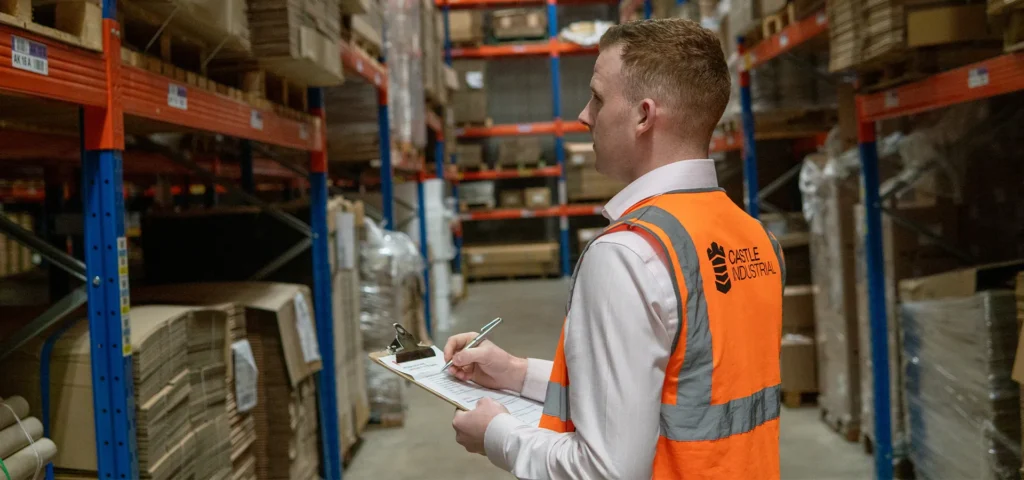
Packaging expert with a clipboard walking down warehouse aisle

Packaging cost is not only the price of the materials. It also includes the time, movement and handling involved in using them.

Look at how items are packed from start to finish:

  • Workflow: Are packing stations laid out so materials, equipment and products are within easy reach?
  • Handling: Is any product being picked up, moved or repacked more often than necessary?
  • Equipment: Is the current equipment appropriate for the volumes and product types you handle, and is it set up correctly?
  • Application methods: Are materials being applied consistently, or does the result vary between shifts and operators?

Small improvements add up. A few seconds saved per pack, a reduction in rework, or fewer materials used per order may look minor in isolation, but across thousands of dispatches they compound into meaningful savings over time. They also tend to improve consistency, which supports product protection as well as cost.

5. BALANCE PACKAGING COSTS WITH PRODUCT PROTECTION

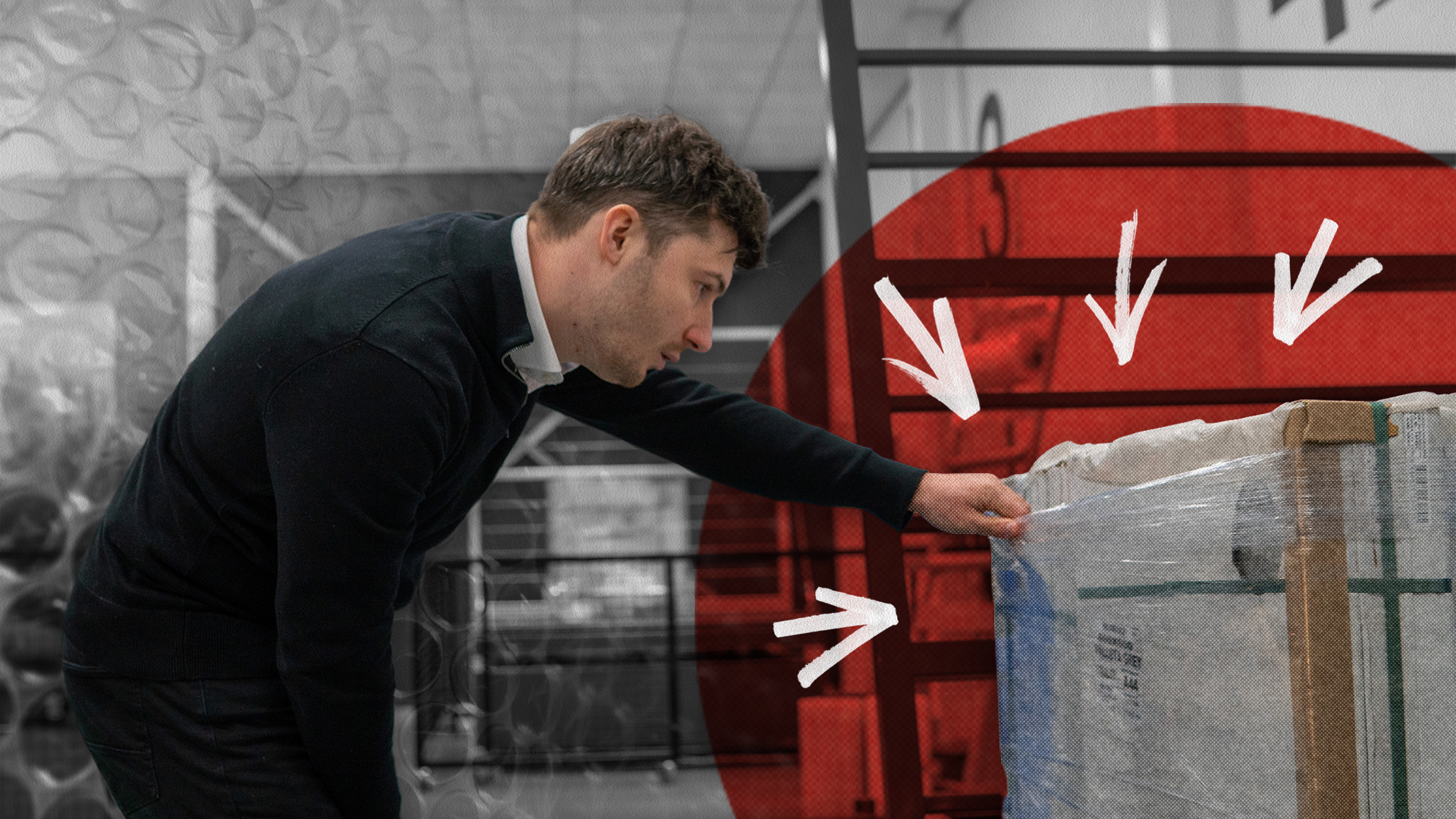
Liam examining plastic pallet wrap on a pallet in the Test Centre

A cheaper material is not necessarily a more cost-effective one. The cost of packaging should always be weighed against the cost of what happens when it underperforms.

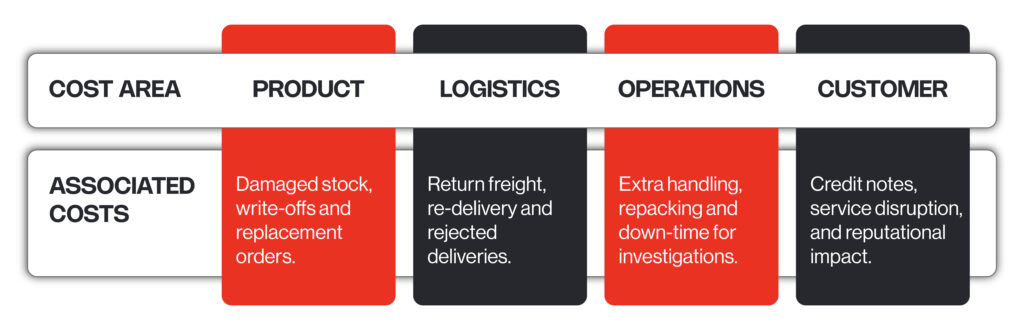
When a load is damaged or rejected, the financial impact rarely stops at the product itself:

Table showing Product, Logistics, Operations, and Customer as cost impact of damaged goods

Load failures also carry safety and compliance considerations, particularly where an unstable load is involved in transit. If a change reduces cost but subsequently weakens containment, the saving is unlikely to last.

6. CARRY OUT A PACKAGING AUDIT

Each of the areas above can be reviewed on its own, but the greatest opportunities often sit between them: a film specification that doesn’t suit the wrapping machine, an oversized box that increases void fill usage, or a packing method that undermines the protection of the material.

That’s why it’s worth reviewing the whole packaging operation periodically, rather than one material at a time. An on-site packaging review looks at:

  • Materials and specifications
  • Processes and workflows
  • Equipment and settings
  • Waste and consumption

Castle’s Packaging Audit is designed to do exactly this. Our technicians assess your operation in person, identify practical opportunities tailored to your unique operation.

Reduce Packaging Costs with Confidence

Load Stability technician in high vis kneeling by a wrapped pallet

Reducing packaging costs is less about using less material, and more about understanding where cost, waste and risk sit across the whole operation.

Reviewing materials, waste, wrapping, packing processes and the cost of damage together gives a clearer picture than any single change can.

The principle holds throughout: cost reduction shouldn’t come at the expense of performance or safety. Where changes are tested and load stability is maintained, savings are far more likely to last.

If you would like to understand where your packaging operation could be improved, speak to Castle about arranging a Packaging Audit.

0%

Blog Space List Category Filter
  • All
  • Pallet Wrapping
  • Load Stability
  • Sustainability
  • Regulations and Compliance
  • Packaging

What Do Stretch Percentages Really Tell Us?

A film that stretches 300% sounds better than one that stretches 250%... or does it? Here’s what stretch film percentages really tell us about pallet wrap performance.

Ben Author

Written by

Ben Thompson

5 Ways to Reduce Plastic Packaging

Reducing plastic packaging is FAST becoming non-negotiable for many businesses. Discover our expert tips on how to reduce the plastic packaging usage in your operation.
Ellie Chalmers Author

Written by

Ellie Chalmers

Why Does My Pallet Wrap Snap?

In bustling warehouse environments, there are few things as frustrating as snapping pallet wrap. Particularly if you’re expected to wrap throughout the day and are faced with issue every SINGLE time.
Ben Author

Written by

Ben Thompson

Achieving Load Containment Force

Containment force is essential to every pallet wrapping operation. Discover how to achieve containment for your pallets and eliminate in-transit damage.
Ellie Chalmers Author

Written by

Ellie Chalmers