






Back to blog
HOW TO FIND THE RIGHT PALLET WRAP FOR YOUR WAREHOUSE
Written by
BEN THOMPSON
Load Stability
Table of Contents
Estimated read time: 21 mins
INTRODUCTION
For warehouse and operations managers, pallet wrapping is a constant balancing act between cost control, plastic reduction, and load stability compliance.
The problem is that many warehouses are using the wrong pallet wrap for their operation. The result? Higher film usage, unstable loads, damaged goods, and unnecessary costs across the supply chain.
Choosing the right industrial pallet wrap is not about chasing the highest stretch percentage or the cheapest roll price. It’s about selecting a film that delivers the right containment force, performance, and efficiency for your specific loads.
In this guide, we’ll break down how to choose the right pallet wrap for your warehouse using a practical, data-driven approach. By matching the correct film to your operation, you can reduce plastic usage, improve load stability, cut waste, and keep your warehouse running safely and efficiently.
WHY LOAD STABILITY DICTATES YOUR PALLET WRAP CHOICE
In the context of modern logistics, load stability is not just about keeping pallets upright, it’s a regulatory and financial benchmark. A stable load retains its integrity throughout the entire journey, mitigating the risk of product damage during transit and protecting warehouse staff during unloading.
Under enforcement guidelines such as EUMOS 40509, the legal responsibility for secure transit loads falls heavily on the consignor. Sub-standard wrapping that allows loads to shift can result in strict penalties, rejected deliveries, and severe disruptions to the supply chain.
When a wrapping operation isn’t optimised effectively, businesses typically experience three core pitfalls:
- Escalating Product Damage: Goods that shift or topple can crush, tear, or warp, directly impacting business’ bottom lines.
- Workplace Safety Risks: Unstable pallets increase the risk of shifting in the racking or collapsing during forklift handling, putting your warehouse team at risk.
- Unnecessary Film Consumption: Over-wrapping a pallet with a low-performance film in an attempt to achieve sufficient load stability is an inefficient fix, inflating plastic waste and increasing the total cost of ownership.
Choosing the right pallet wrap isn’t just about keeping pallets upright—it’s about protecting your goods, your staff, and your bottom line. Get that balance right, and you’ll save yourself a world of trouble.
BEN THOMPSON
TECHNICAL MANAGER
CHOOSING THE RIGHT INDUSTRIAL PALLET WRAP: KEY CONSIDERATIONS
Before procuring a new specification of pallet stretch wrap for your warehouse, several operational variables must be assessed to ensure the material performs consistently under stress.
Load Characteristics and Profiles
The weight, fragility, and shape of your goods dictate the wrapping pattern and required film characteristics. Heavily concentrated or irregularly shaped loads with sharp corners demand a film with high puncture resistance to prevent tearing during transit. Conversely, lighter, crushable loads require precise containment force that secures the pallet without damaging the primary packaging.
Warehouse Environment
Temperature and humidity variations can alter the performance of certain polymers. From cold storage to high-humidity environment, pallet wrap storage will impact a film’s elasticity or cling. Identifying these environmental factors ensures you select an industrial pallet wrap engineered to maintain its elastic memory, even under extreme conditions.
Machinery and Stretch Requirements
The mechanical capabilities of your wrapping machinery are critical. For example, if your warehouse uses machine pallet wrappers with a pre-stretch carriage, it’s important to select a film that offers high-performance pre-stretch.
TYPES OF PALLET WRAP
To streamline the selection process, it pays to understand how different manufacturing techniques alter the performance of the film:
| Film Type | Core Characteristics | Primary Applications | Operational Advantage |
|---|---|---|---|
| Blown Film | High puncture resistance, excellent elastic memory, and a tacky, dull finish. | Irregular, heavy, or sharp loads; cold storage facilities. | Exceptional holding force that resists tearing on sharp edges. |
| Cast Film | High clarity, smooth gloss finish, and quiet unwind during application. | Uniform pallets and retail goods requiring barcode scanning through the wrap. | Consistent thickness and cost-effective high-volume production. |
| Nano Films | Ultra-thin, multi-layered resin structure delivering exceptional tensile strength. | High-speed automated wrapping operations with pre-stretch systems. | Drastically reduces material usage while maintaining high containment force. |
| Pre-Stretch Film | Mechanically pre-stretched during manufacturing, thin yet highly rigid. | Hand-wrapping stations or lower-speed machinery without pre-stretch heads. | Requires less physical effort to apply and minimises film waste per pallet. |
| Recycled Films | Integrates post-consumer or post-industrial recycled polymers. | Operations aligning with sustainability targets or plastic packaging levy obligations. | Supports environmental goals without sacrificing load stability. |
HOW TO WRAP A PALLET WITH PLASTIC FOR MAXIMUM STABILITY
Containment Force
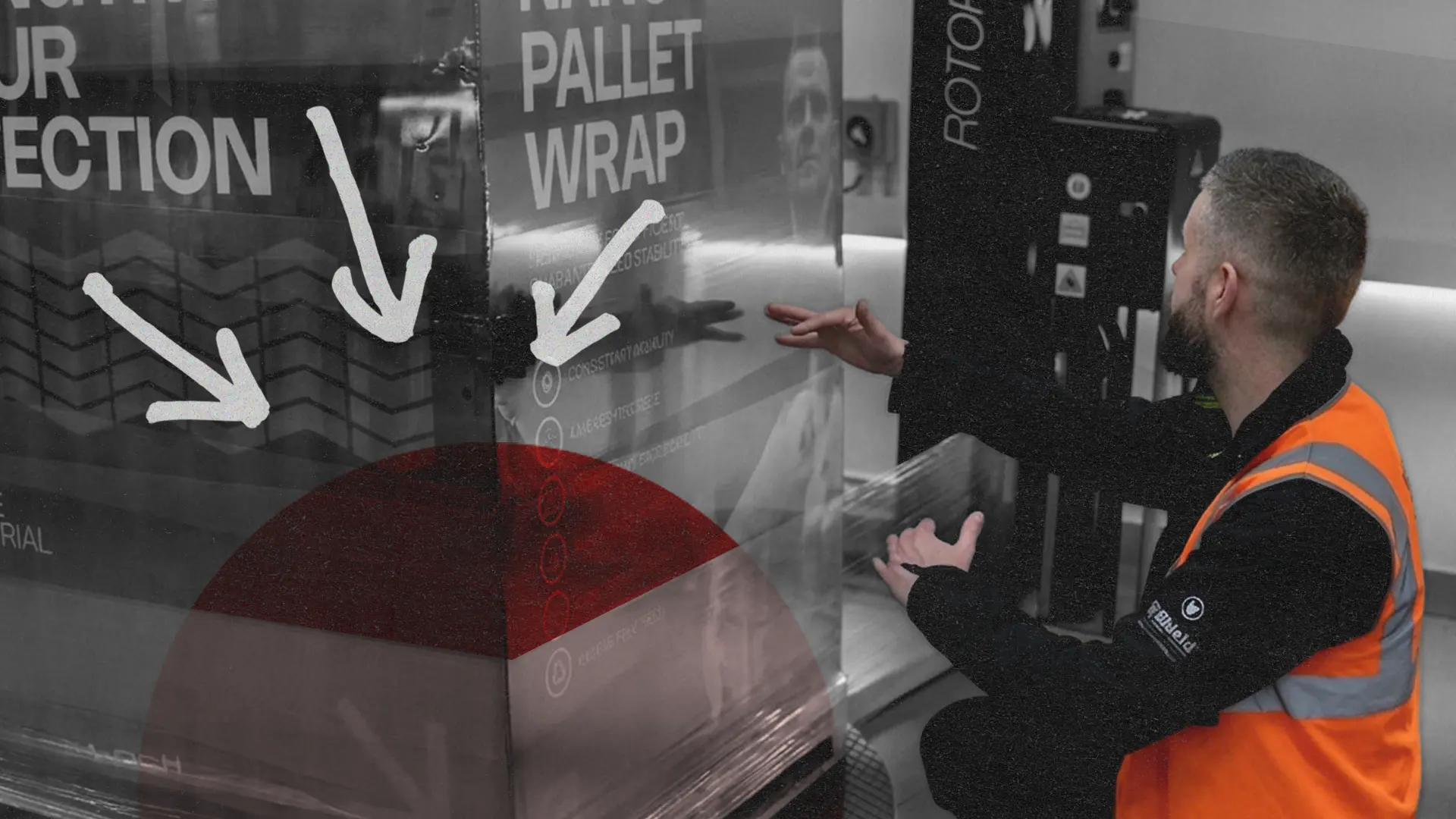
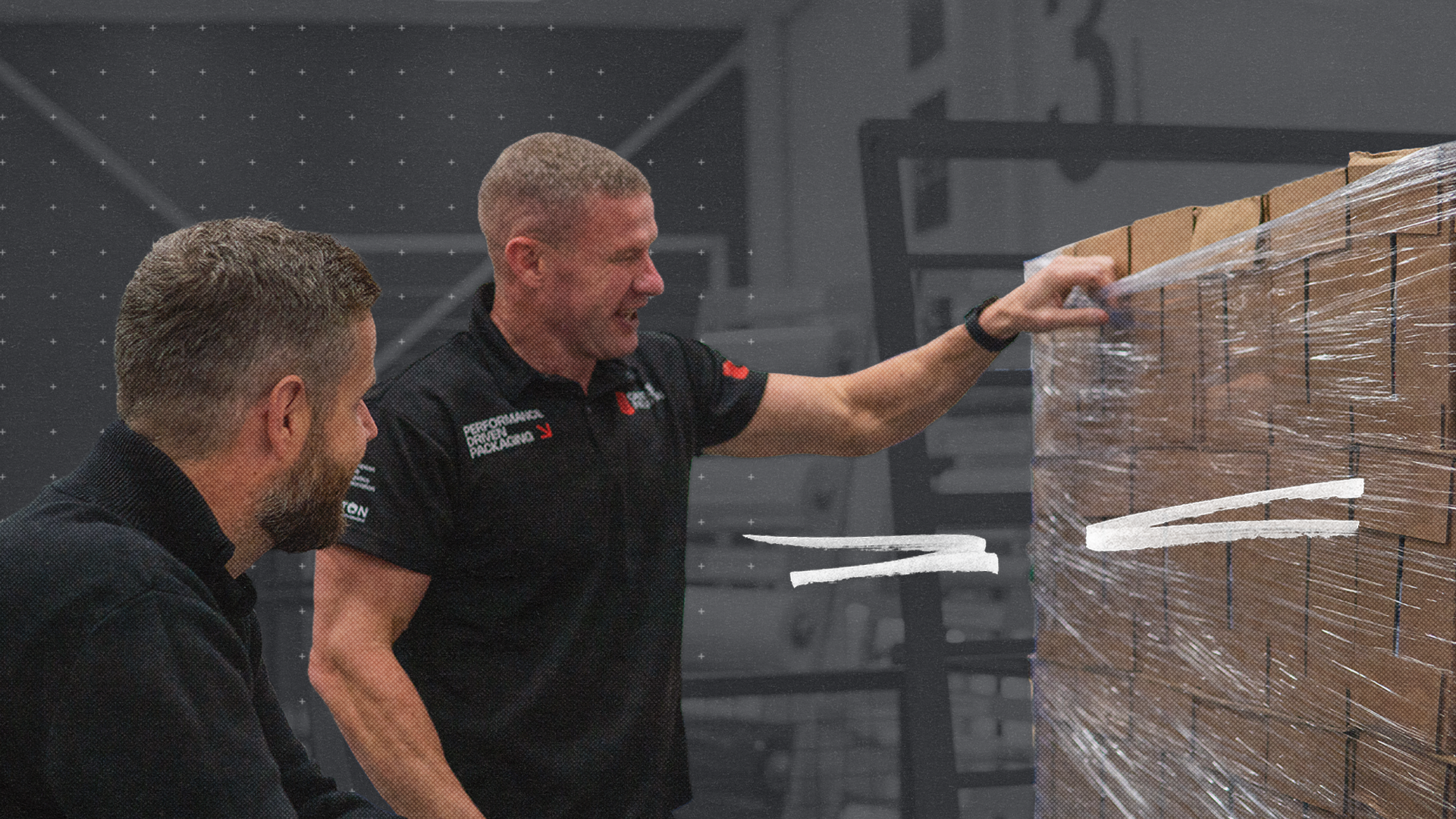
Even the highest quality industrial pallet wrap will fail if applied incorrectly. To secure a standard pallet effectively and achieve sufficient containment force, the technical team at Castle follow a standardised step-by-step process:
1. Secure the Base: Anchor the film firmly to the pallet base. Begin wrapping around the wooden pallet itself at least three times to create a rigid foundation that prevents the load from sliding off the deck.
2. Move Upwards with an Overlap: Wrap upwards in a spiral pattern, ensuring each layer overlaps the previous one by at least 50%. Maintain consistent tension throughout the upward pass.
3. Reinforce the Top: Once you reach the top of the load, apply a minimum of three complete layers to secure the upper tier of goods, as this area experiences significant centrifugal force during transit.
4. Complete the Downward Pass: Spiral back down to the base of the pallet to finish the cycle. Cut the film cleanly and press the tail firmly against the load to ensure the cling properties hold the end secure.
Finding The Best Pallet Wrap For Your Warehouse
From cost per roll to stretch percentages, there are many different metrics warehouses use to measure the effectiveness of industrial pallet wrap.
However, at Castle, we focus on how the stretch film performs once it’s wrapped on the pallet. To evaluate your wrapping operation accurately, track these metrics:
- Containment Force: The overall compressive pressure exerted on the load by the film. It must be sufficient to prevent product movement but not so high that it crushes the goods.
- Puncture and Tear Resistance: The capacity of the film to withstand sharp edges, pallet splinters, or minor impacts from material handling equipment without unravelling.
- Throughput & Downtime: If your team is experiencing persistent film snaping, costly down-time, or reducing your throughput, it may be time to upgrade your pallet wrap selection.
OPTIMISE YOUR WRAPPING OPERATION WITH DATA-BACKED INSIGHTS
Selecting the right pallet wrap is an intricate process that directly impacts your operational safety and bottom line. Because every warehouse configuration involves a unique combination of machinery, load profiles, and environmental factors, a generic approach to film selection rarely yields the best results.
At Castle Industrial, our technicians specialise in eliminating the guesswork from load securing. If you are looking to validate your current choices, or you’re considering switching film types, our Load Stability Technicians can provide clarity.
Get in touch with the Castle team today to find out more about our on-site film reviews and how we can help optimise your wrapping operation.
How to Maximise Warehouse Efficiency with Automation

Written by
Why Does My Pallet Wrap Snap?

Written by
The Industrial Adhesive Tape Selection Guide

Written by
Do You Really Need an On-Site Pallet Wrap Review?

Written by
Achieving Load Containment Force

Written by
Guide to Pallet Wrapping Machines

Written by
What is Pre-Stretch Pallet Wrap?

Written by
Long-Term Pallet Wrap Storage: Expert Tips from the Warehouse

Written by
What Is Void Fill Packaging (and Does It Prevent Damage)?

Written by