

What Do Stretch Percentages Really Tell Us? | Castle Industrial
Skip to content

Back to blog

WHAT DO STRETCH PERCENTAGES REALLY TELL US?

Ben's Headshot

Written by

BEN THOMPSON

Load Stability

Pallet Wrapping

Table of Contents

Estimated read time: 23 mins

INTRODUCTION

A film that stretches 300% sounds better than one that stretches 250%. But on your pallets, it might not be.

Stretch percentage appears on data sheets, wrapper displays and film comparison charts, and it’s one of the most quoted figures in pallet wrap. But when did it become a metric to judge pallet wrap quality or performance?

The reality is that stretch percentage says nothing about a film’s quality and consistency, how much stretch your pallet needs, or how well the film will hold the load once it’s wrapped.

In this guide, we’ll look at what stretch percentages do tell us about pallet wrap, where it stops being useful, and why testing the finished load gives a clearer answer than any single number.

WHAT DO STRETCH PERCENTAGES ACTUALLY TELL US?

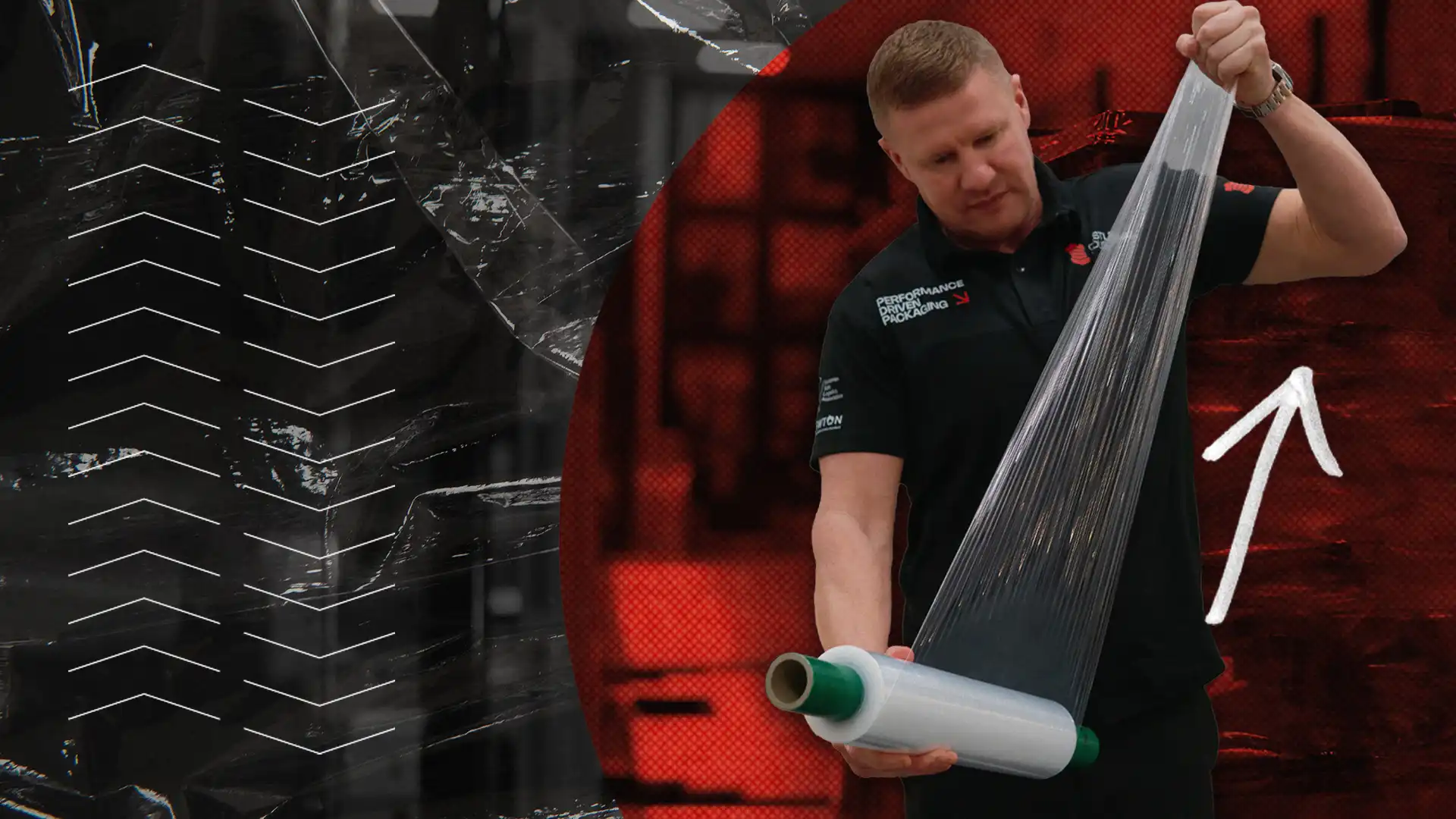
Stretch percentages describe how far pallet wrap can be elongated from its original length as it’s applied to the pallet.

As film stretches, its polymer chains move from a disordered state into alignment, which increases its directional strength. When that film is wrapped around a pallet, the elongation generates retraction, and the retraction creates load containment.

In other words, the film gets stronger in the direction it’s pulled.

How to Use Stretch Percentages in Practice

While stretch percentages don’t give us the full picture by any means, here’s where they can be useful:

Pre-Stretch

By stretching the pallet wrap before it’s applied to the pallet (pre-stretching), your film can go further. Generally speaking, the higher the pre-stretch percentage, the less film per pallet. This supports both cost and plastic reduction goals.

Find out whether you should stretch pallet wrap to its maximum stretch potential in our guide.

Load Containment

Stretch percentages also influence that all important containment force, the pressure that keeps a load together through handling and transport. Unstable pallets don’t just result in product damage. Roadside inspections under Directive 2014/47/EU mean that vehicles may be inspected for cargo securing too. Without proper stretching and load containment, pallets could be in breach of road safety laws.

Limitations to stretch percentages

Describing a pallet wrap’s performance on elongation alone can be likened to describing a car only by its horsepower. It is a valid metric, but you would still want to know about the rest of the vehicle too.

Data sheets add to the problem. Many standard ASTM and ISO figures come from small pallet wrap samples stretched far more slowly than a wrapping operation would stretch them in a warehouse. This is why looking at stretch percentage alone can lead to problems in load stability.

STRETCH PERCENTAGES AND FILM PERFORMANCE

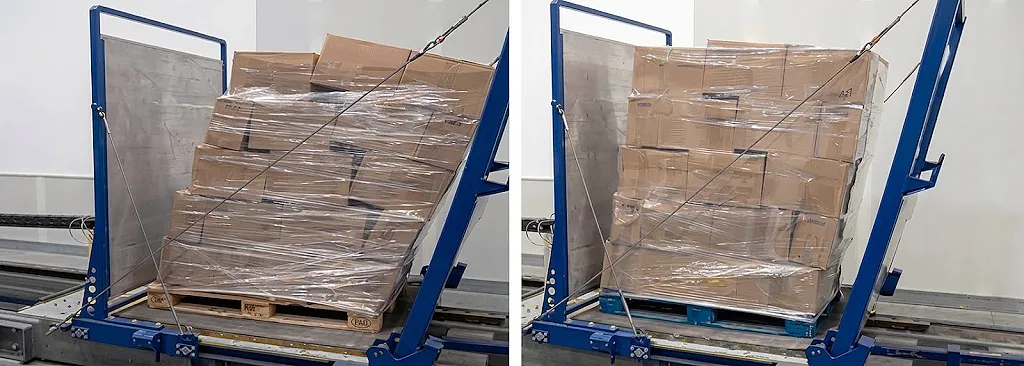
Pallet wrap has a working zone, and its behaviour changes across it. Take two identical pallets, wrapped with the same pallet wrap and wrapping pattern, with only the stretch level changed:

  • Under-stretched:

The boxes will still be able to move because the film has too much give left to take up.

  • Optimised stretch:

The film resists movement because it’s been stretched to achieve a rigid state.

Small changes in stretch can also change how defects behave. For example, a film may tolerate the micro-holes that form at 300% stretch, but at 330% a film containing recycled content may not survive the propagation of a defect as it passes through the rollers.

Stretch Percentages in Recycled Content

Recycled content pallet wrap (PCR) adds another variable to the wrapping process. It can reduce elongation and widen the spread of film properties, so consistency becomes just as important as maximum stretch.

In a comparison study, a 20-micron film with 30% recycled content had to be stretched less than a 15-micron virgin film to stay stable. Camera analysis showed around 50 times as many defects in the thicker film.

These examples aren’t an argument against recycled content. But both show that the stretch percentage needs to be balanced with the film’s ability to secure the load.

The best films are not the films that stretch the furthest, and they’re not even those that produce the most force. The best films are those that are consistent, that we can work with from site to site and machine to machine.

LIAM BLAND

TECHNICAL SOLUTIONS LEAD

HOW STRETCH PERCENTAGE INTERACTS WITH YOUR WRAPPING PROCESS

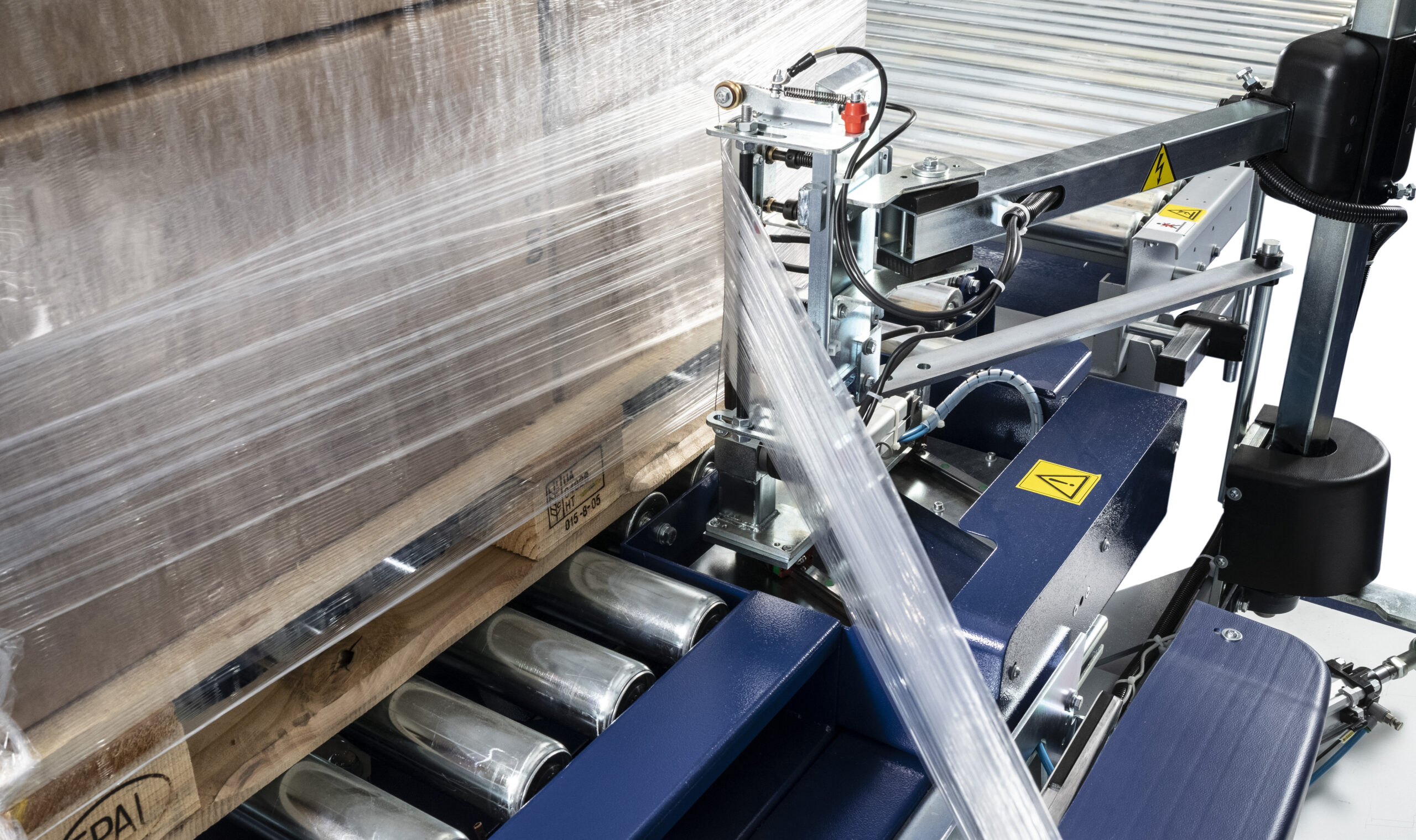
Technoplat 3000 - cutting and welding detail

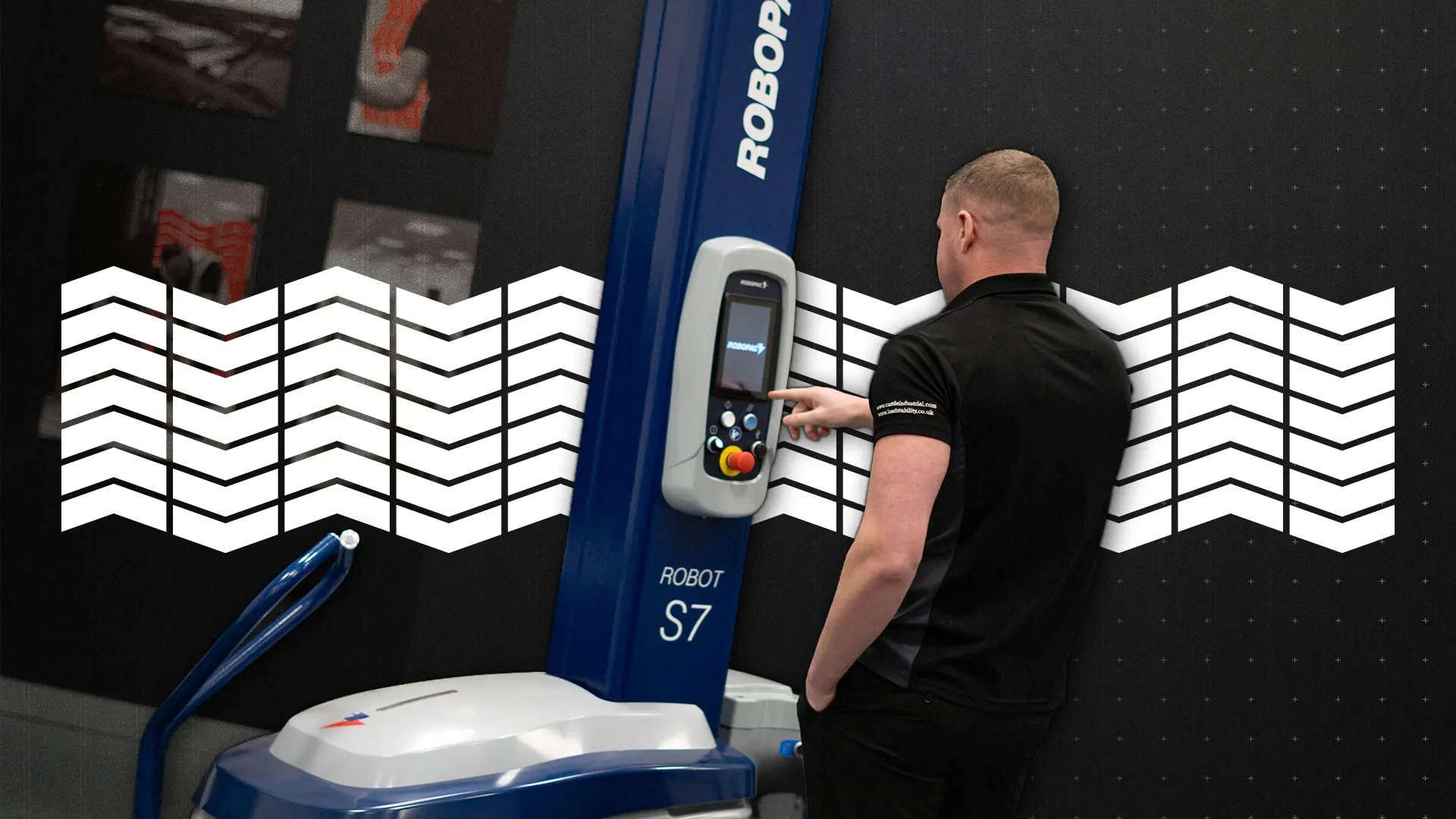
The stretch percentage set on the wrapper and the stretch percentage achieved on the pallet are often different. In Castle’s own research across around 177 different wrapping machines, we found the average intended stretch was 233%, compared to the average realised stretch which was more like 182%.

This gap between intended and realised stretch has several common causes:

1. Roller condition: worn or contaminated rollers can fail to grip the film, reducing its effectiveness in stretching the film.

2. Motor strength: a stiffer film, such as one with contamination or recycled content, can slip through the pre-stretch rollers if the motor lacks the power to stretch it.

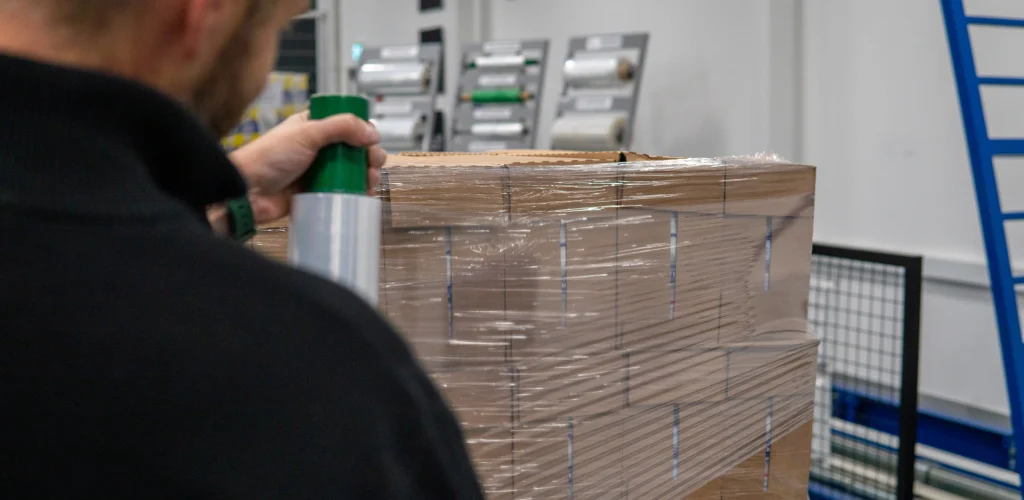
3. Operator practice: in manual operations, the amount of stretch is down to the operator pulling the film by hand, meaning application varies between people and between shifts.

4. Machine age: the average machine found in our study was eight to nine years old. Many of the older machines are designed for thicker films with more built-in tolerance.

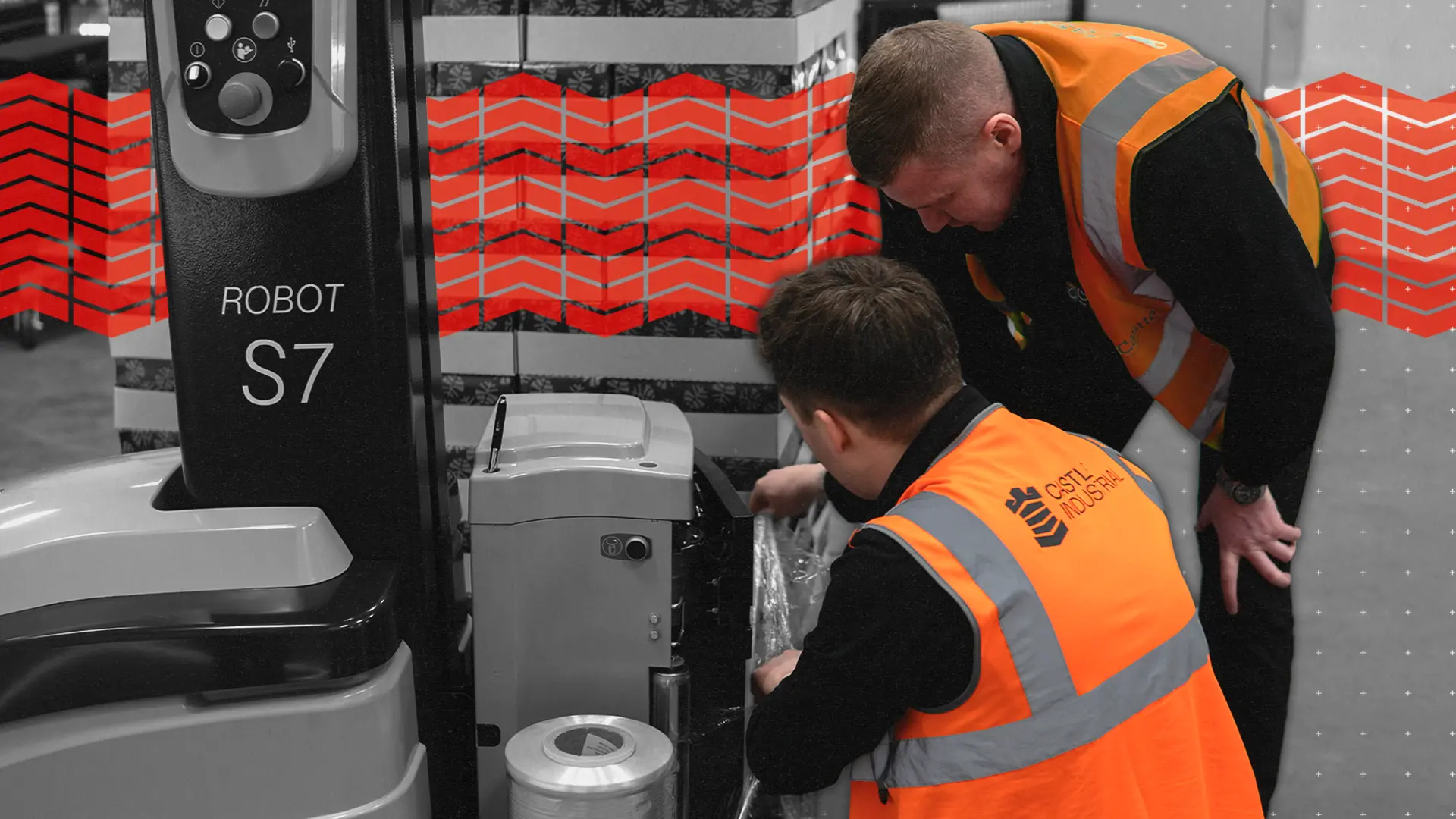
This is why one film can give different results on the same load across two different sites. If the film is stretching less than intended, film consumption rises and the force on the load changes. Speed, tension and wrap pattern also affect how well the film performs, and abrupt changes in speed, feed or direction can introduce inconsistency across thousands of pallets.

Why Machine Settings Matter When Applying Pallet Wrap

Treat the settings as part of the film specification. Before changing film type or gauge, it helps to ask:

  • Is the wrapper really achieving the stretch it’s set to deliver?
  • Is the stretch within the working zone of the film?
  • Are the rollers, motor and tension settings in a condition to support it?
  • Do wrapping patterns and speed changes leave the load consistently contained?

Think of stretch film like an unfinished product. Only once it has been set up correctly on the wrapper and applied to the load will you be able to assess its quality or performance.

WHAT HAPPENS WHEN FILM PERFORMANCE IS TESTED AT APPLICATION STRETCH?

Rather than relying on generalised data sheets, we always recommend testing the pallet wrap under the same conditions your film will experience in your specific wrapping operation.

Why Testing the Finished Load Matters

Data sheets can’t tell you how pallet wrap will behave in your operation. Test it under your own conditions: stretched at speed, around a real pallet.

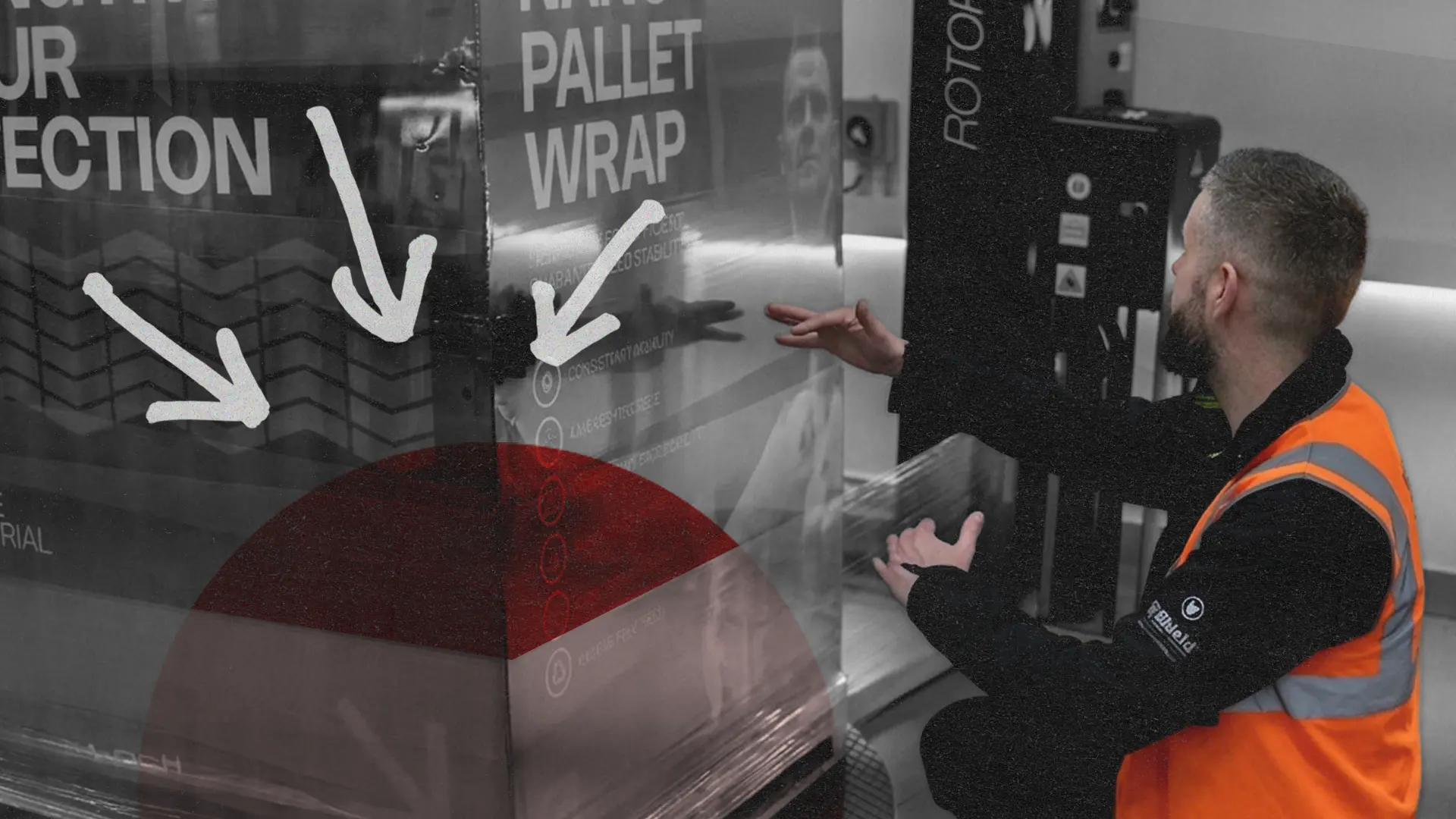
A pallet that looks tight leaving the wrapper may not hold the same force after thousands of destabilising events in transit. Testing the finished load shows how the whole unit responds to braking, cornering and vibration.

Load configuration matters too. In EUMOS 40509 tests at 0.5g on an acceleration bench, a change in configuration alone can greatly reduce deformation. Learn more about achieving the rigid state with stretch film in our guide.

FROM STRETCH PERCENTAGE TO PALLET STABILITY: LOOKING AT THE WHOLE SYSTEM

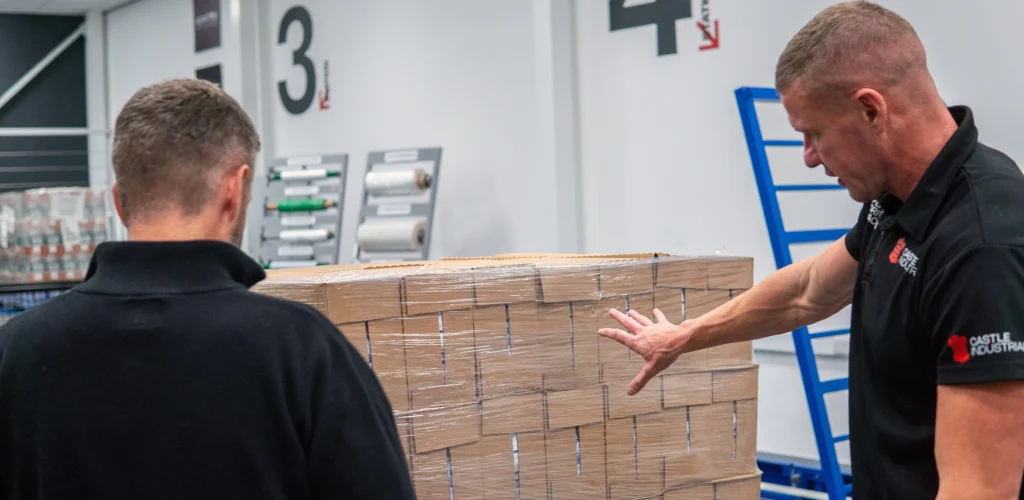
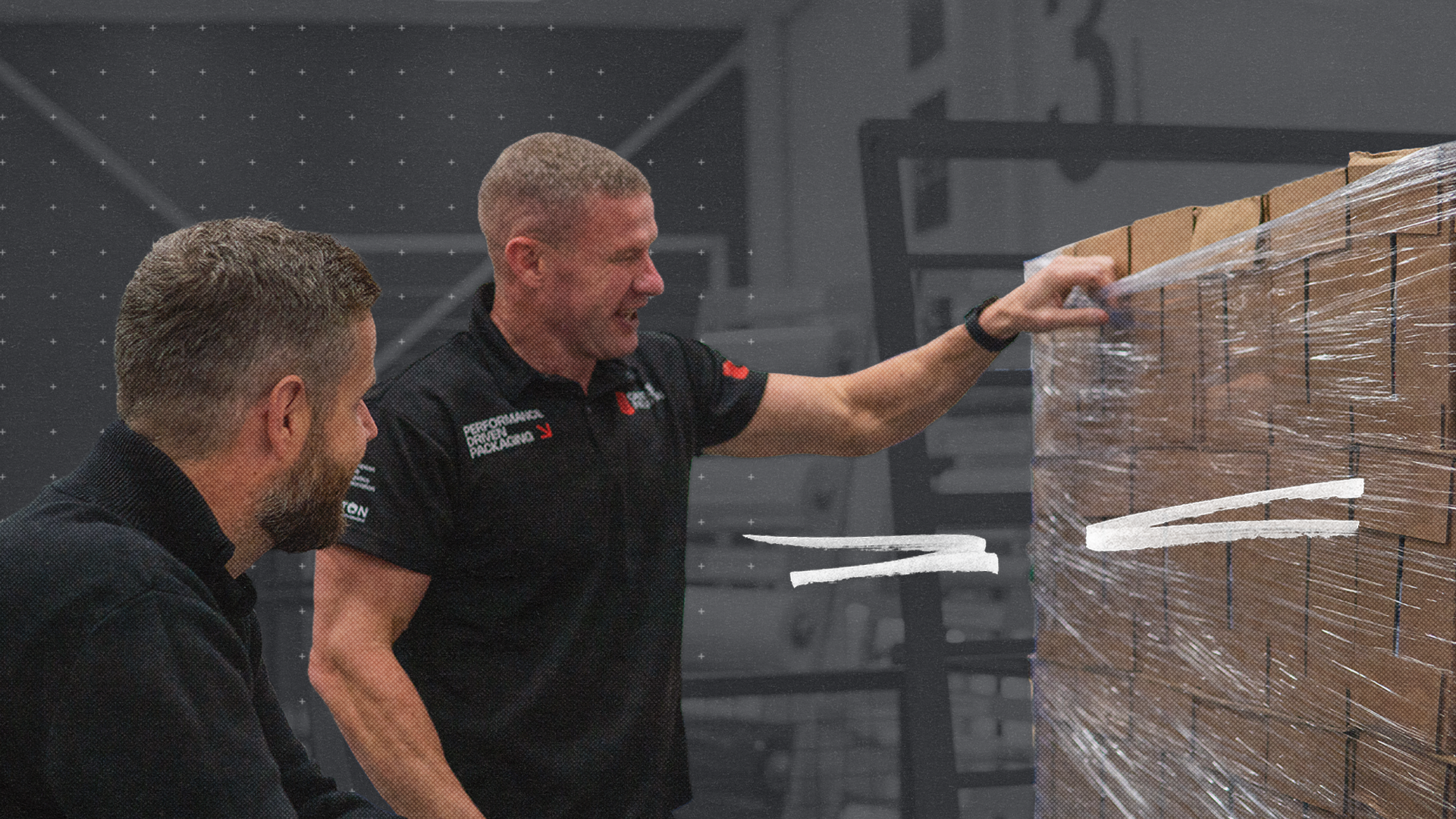
Ben and David analysing a wrapped pallet in the test centre

Stretch percentages remain a useful figure, but the better question to ask is: how is the film behaving once it’s applied to your pallet.

Stability comes from the interaction of the film, the machine, the load, the journey, and, in manual operations, the person applying it.

At Castle, we approach this in three steps:

1. Understand the film: look at force and consistency across the stretch range, not just at maximum elongation.

2. Check the process: compare intended and realised stretch, and review roller condition and machine setup. Our technicians can do this on-site alongside your team.

3. Validate the result: test the finished load, because stability needs evidence.

PALLET TESTING IN THE UK

The Castle Test Centre is the only load stability test centre of its kind in the UK with transit simulation and film performance capabilities. Our technicians can compare film types, stretch levels and wrapping patterns on your own loads, and report the results as actionable data.

If you are reviewing your pallet wrap stretch settings, considering a different film, or looking to reduce film consumption, then simulation testing can confirm the right specification for your load before you commit.

Get in touch to speak to one of our technicians and find out how we can help.

0%

Blog Space List Category Filter
  • All
  • Pallet Wrapping
  • Load Stability
  • Regulations and Compliance
  • Sustainability
  • Packaging

What Do Stretch Percentages Really Tell Us?

A film that stretches 300% sounds better than one that stretches 250%... or does it? Here’s what stretch film percentages really tell us about pallet wrap performance.

Ben Author

Written by

Ben Thompson

5 Ways to Reduce Plastic Packaging

Reducing plastic packaging is FAST becoming non-negotiable for many businesses. Discover our expert tips on how to reduce the plastic packaging usage in your operation.

Ellie Chalmers Author

Written by

Ellie Chalmers

Why Does My Pallet Wrap Snap?

In bustling warehouse environments, there are few things as frustrating as snapping pallet wrap. Particularly if you’re expected to wrap throughout the day and are faced with issue every SINGLE time.
Ben Author

Written by

Ben Thompson

Achieving Load Containment Force

Containment force is essential to every pallet wrapping operation. Discover how to achieve containment for your pallets and eliminate in-transit damage.
Ellie Chalmers Author

Written by

Ellie Chalmers

Guide to Pallet Wrapping Machines

Whether you’re just starting your machine wrapper research, or you’re comparing specific models, this guide breaks down the essentials of machine wrapping
Ellie Chalmers Author

Written by

Ellie Chalmers

What is Pre-Stretch Pallet Wrap?

Pre-stretch pallet wrap explained: what it is, how it works, and whether it's the right film for your wrapping operation.
Ellie Chalmers Author

Written by

Ellie Chalmers