


Table of Contents
Estimated read time: 20 mins
INTRODUCTION
When it comes to pallet wrapping, not all films are created equal and the choice you make has a bigger impact than you might think. The right pallet wrap doesn’t just hold your load together; it directly influences your material costs, your team’s wellbeing, and whether your goods arrive at their destination in one piece.
Pre-stretch pallet wrap is one of those choices, and once introduced to a warehouse operation, can raise some necessary questions. What actually is it? How is it different from standard stretch film? And is it the right move for your operation?
In this guide we’ll cover all of that: from what pre-stretch film is, how to apply it correctly, and which industries stand to gain the most from making the switch.
WHAT IS PRE-STRETCH WRAP?
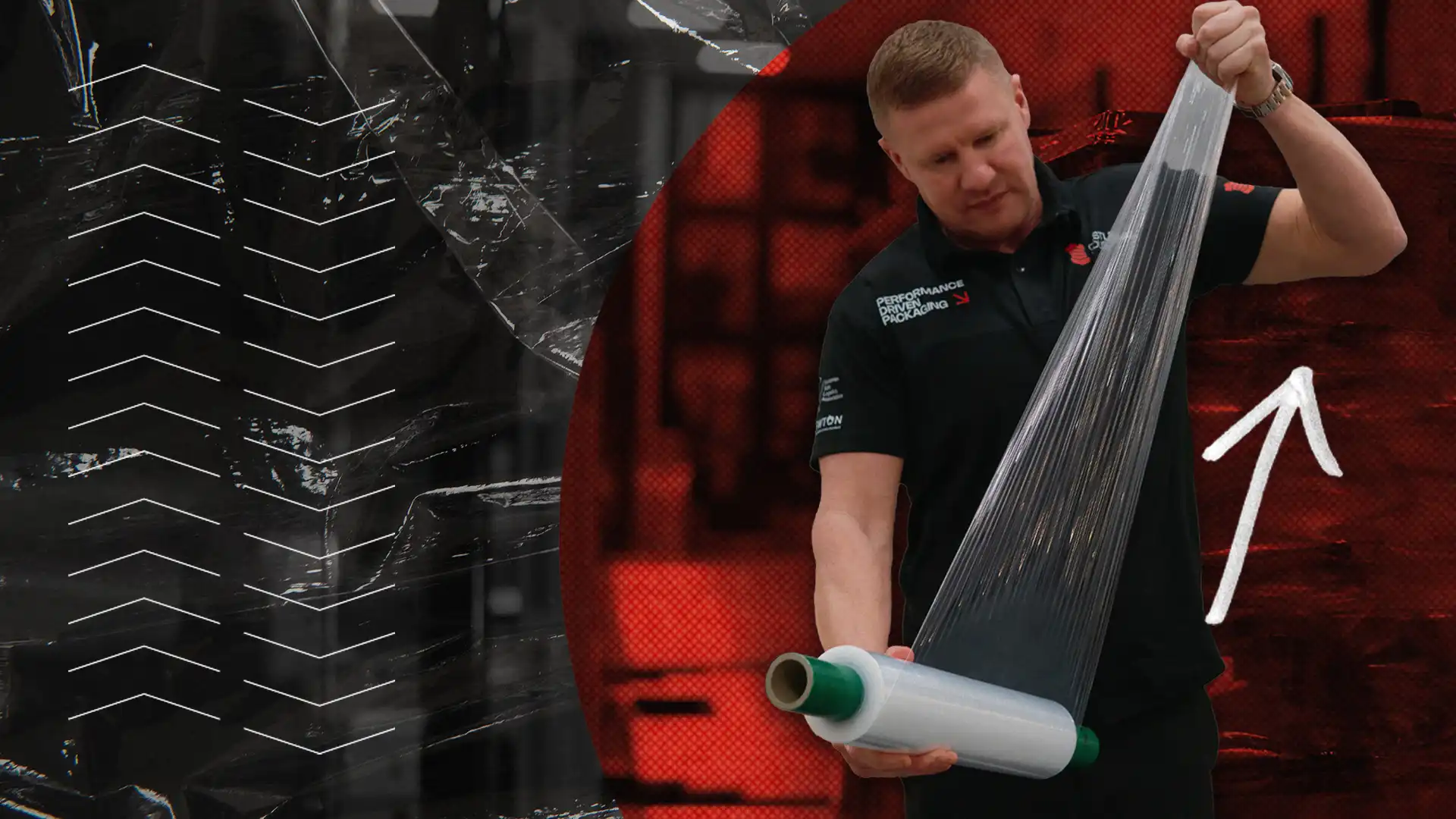
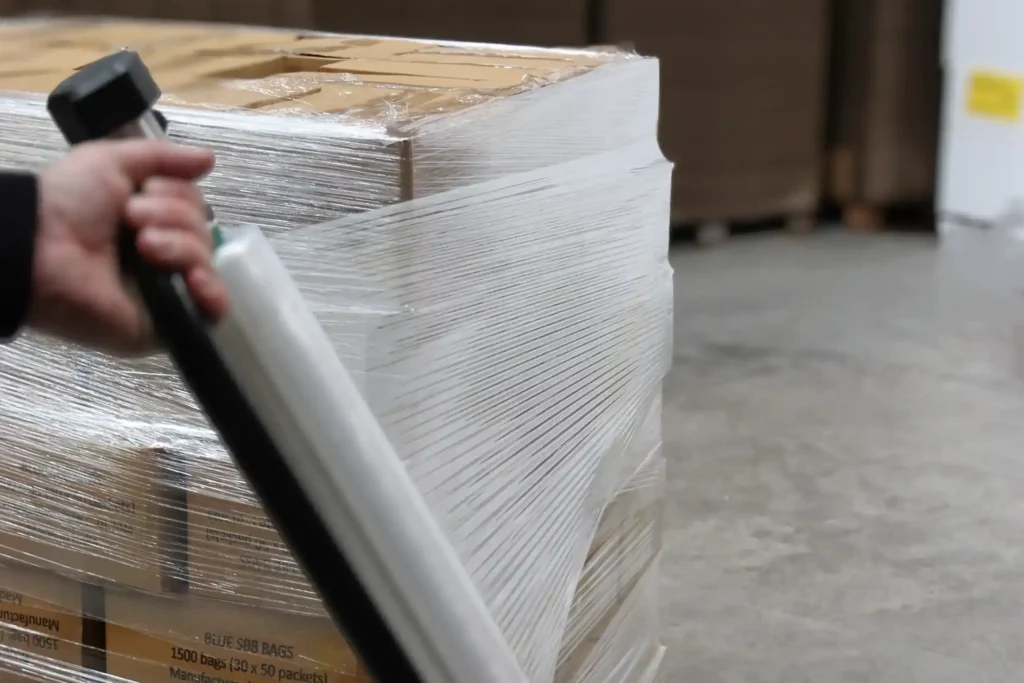
Pre-stretched films are manufactured primarily to help operators increase the efficiency of hand wrapping operations. Unlike standard hand films which require manual stretching during application, pre-stretched film undergoes a controlled stretching process during manufacturing.
This results in a thinner but equally robust film that is not only more consistent in tension, but easier to apply. For example, once pre-stretched, a 14 micron can reduce to as little as 5 micron.
This significant reduction in thickness translates into lighter rolls, easier handling, and less storage space required, all without compromising on strength or performance.
PRE-STRETCH VS STRETCH FILM:
WHAT’S THE DIFFERENCE?
The key distinction between pre-stretch and standard stretch film comes down to when and how the stretching happens. With standard stretch film, the operator does the stretching at the point of application (pulling and tensioning the film manually as they wrap). With pre-stretch film, that stretching has already been done during manufacturing, meaning the film arrives ready to apply with minimal effort.
Pre-stretched pallet wrap has several distinctive characteristics that set it apart from traditional stretch films.
Application:
Pre-stretch film dramatically reduces physical strain during application because it has already been stretched to its optimal capacity. Operators no longer need to apply excessive force, making the wrapping process faster and less strenuous.
Consistency:
The pre-stretched nature of the film ensures uniform tension and application, regardless of operator technique or physical strength. This consistency leads to predictable and controlled wrapping costs, as well as uniformly stable loads.
Strength:
Despite being significantly thinner, pre-stretch film retains impressive strength, puncture resistance, and durability. This is thanks to the molecular alignment achieved during manufacturing. Pre-stretch film’s robust performance ensures secure transport conditions, even with heavy or irregular palletised loads.
A note about stretch vs memory: Pre-stretch is the act of mechanically stretching the film before application, while stretch memory is the film’s natural tendency to try to return to its original length after being stretched. Find out more in our guide to stretch film memory.
BENEFITS OF PRE-STRETCHED PALLET WRAP
Pre-stretch film delivers meaningful advantages that make the switch worthwhile. Here’s what to expect:
Ease of Use
Minimal effort is needed for wrapping, which substantially reduces physical strain and fatigue for warehouse teams. This creates a safer application environment, reduces the risk of workplace accidents, and improves ergonomics.
Cost Efficiency
Due to pre-stretch’s consistent application and stretch properties, the usage per pallet is very predictable. By reducing the overall film consumption per pallet, businesses can significantly cut down on material costs and enhance budget predictability.
Enhance Load Stability
Pre-stretch pallet wrap maintains its tension throughout transit, eliminating the risk of further stretching or loosening. The post-application tightening enhances security further, reducing the risk of product shifting, damage, or loss during transport.
Improved Durability
Pre-stretch film has reinforced and oscillated edges, which protects against common issues like tearing or edge weakening. The special additives incorporated into the film ensure tears or punctures do not propagate, maintaining film integrity even if damaged.
Planet Friendly
Reduced material usage directly translates into less plastic waste. This supports business’ sustainability goals by significantly decreasing packaging waste and contributing proactively to environmental standards.
Pre-stretch is an extremely effective way of increasing both efficiency and consistency across hand wrap processes.
Given that the stretch has mostly been taken out of the film for you, it allows operators to concentrate on delivering the right amount of tension to the load.
LIAM BLAND
TECHNICAL CONSULTANT
HOW TO APPLY PRE-STRETCH PALLET WRAP
Because pre-stretch wrap has already reached its optimal stretch capacity during manufacturing, the wrapping technique is more relaxed than warehouses may be used to. Operators should apply pre-stretch with light, consistent tension, letting the film do the work rather than pulling hard against it.
- Start at the base of the pallet, overlap each pass by around 50%.
- Work upward in a smooth, steady motion.
- Avoid jerking or over-tensioning the film, as this can cause inconsistent application and reduce the load-securing performance.
A pre-stretched hand film dispenser can make a significant difference here, giving your team better control and more consistent results across every wrap.
Most importantly, if you’re making the switch from traditional stretch film to pre-stretch, it’s important to carry out load stability testing to ensure the load containment of your pallets is optimised.
Warehouse Training
It’s also worth noting that because pre-stretch requires a different wrapping technique (particularly around the reduced effort required during application) staff training can be very beneficial. Teams that are used to standard stretch film may initially over-tension pre-stretch wrap out of habit, which can affect results. A short period of proper onboarding goes a long way.
Whether your load type, correct application is critical. Take a look at our guide to common pallet wrapping mistakes and how to avoid them to make sure your team is set up for success from day one.
IS PRE-STRETCHED PALLET WRAP RIGHT FOR YOUR OPERATION?
Pre-stretched film offers a highly effective, economical, and environmentally friendly solution for pallet wrapping needs. With clear advantages in ease of use, consistent performance, and enhance load security, it provides significant operation efficiencies and sustainability benefits for businesses across diverse sectors.
It’s particularly well-suited to operations in:
- Manufacturing
- Retail
- Logistics
- Food and Drink
- Pharma and Healthcare
- Construction
- Chemicals and Hazardous Goods.
Essentially any sector where consistent load stability, material efficiency, and team wellbeing are priorities.
That said, the right pallet wrap is always specific to your operation. Load type, weight, transit distance, and wrapping frequency all play a role in determining the best film for your needs. For a full breakdown of how to evaluate your options, take a look at our guide to finding the right pallet wrap for your warehouse.
Get Your Film Review
Whatever your operation, proper testing and film application is a critical part of any wrapping programme.
If you’d like expert guidance tailored to your specific setup, the technical team at Castle can assess your current wrapping operation and recommend the best solution for your needs.
What is Pre-Stretch Pallet Wrap?

Written by
Long-Term Pallet Wrap Storage: Expert Tips from the Warehouse

Written by
What Is Void Fill Packaging (and Does It Prevent Damage)?

Written by
What is The Safest Pallet Stacking Pattern

Written by
PPWR Regulation: How to Reduce Plastic and Maintain Load Stability

Written by
What is EPR? An Introduction to Extended Producer Responsibility

Written by
What is Stretch Film Memory?

Written by
Achieving the Rigid State with Stretch Film

Written by
Cutting-Edge Load Stability Techniques That Will Lower Your Packaging Expenses

Written by