Table of Contents
Estimated read time: 20 mins
MAKING THE MOVE TO MACHINE PALLET WRAPPING
The jump from hand to machine wrapping doesn’t have to be a leap into the unknown. After all, transitioning to a machine pallet wrapper is about bringing predictability to your operation.
Whether you’re just starting your machine wrapper research, or you’re comparing specific models, this guide breaks down the essentials of machine wrapping, including:
- Mechanical brakes, fixed gear, and variable stretch systems.
- How to choose a machine that matches your specific load types.
- Tips for a smooth, safe transition with on-site audits and load containment testing.
HOW PALLET WRAPPING MACHINES WORK
The main feature which sets machine wrapping apart from hand wrapping is the consistent load containment force – that’s the inward pressure that holds the load together and prevents movement during transit.
While hand-wrapping relies on human effort, a machine’s ability to achieve load stability depends on three critical factors:
- Automation Level: How much the machine handles versus the operator.
- Wrapping Mechanism: The physical method used to apply the film.
- Carriage System: The technology (such as mechanical brakes or pre-stretch systems) that control film tension and elongation.
PALLET WRAPPER AUTOMATION LEVELS
Semi-Automatic Wrappers
Requires some level of human input or intervention to operate, with certain stages of the process carried out manually. The operator initiates or guides key actions, while the system handles the more repetitive or mechanical tasks automatically.
Fully Automatic Wrappers
Operates entirely without the need for human involvement once the process has been initiated. The system manages all stages independently, improving efficiency and reducing the risk of human error.
PALLET WRAPPER MECHANISMS
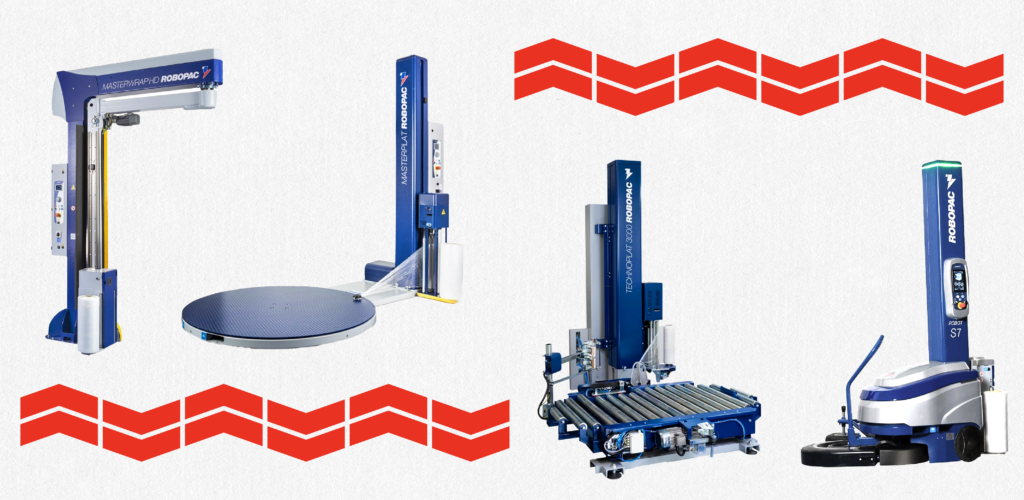
Turntable Stretch Wrappers
Turntables are one of the most common formats in UK warehousing: the pallet rotates on a powered platform while the film carriage travels up and down a fixed mast. They’re compact, cost-effective, and compatible with most load types, turntable machines suit standalone use or integration into semi-automated lines.
Rotary Arm Stretch Wrappers
For heavy, oversized, or unstable loads, rotary arm is the go-to choice. The pallet stays stationary while a powered arm rotates around it to apply the film. This is the preferred format for fully automated, high-throughput lines where pallets travel through on a conveyor without any manual handling.
They carry a higher price point and larger footprint than turntable equivalents, but for loads that cannot rotate, they are often the only appropriate solution.
Robotic / Spiral Wrappers
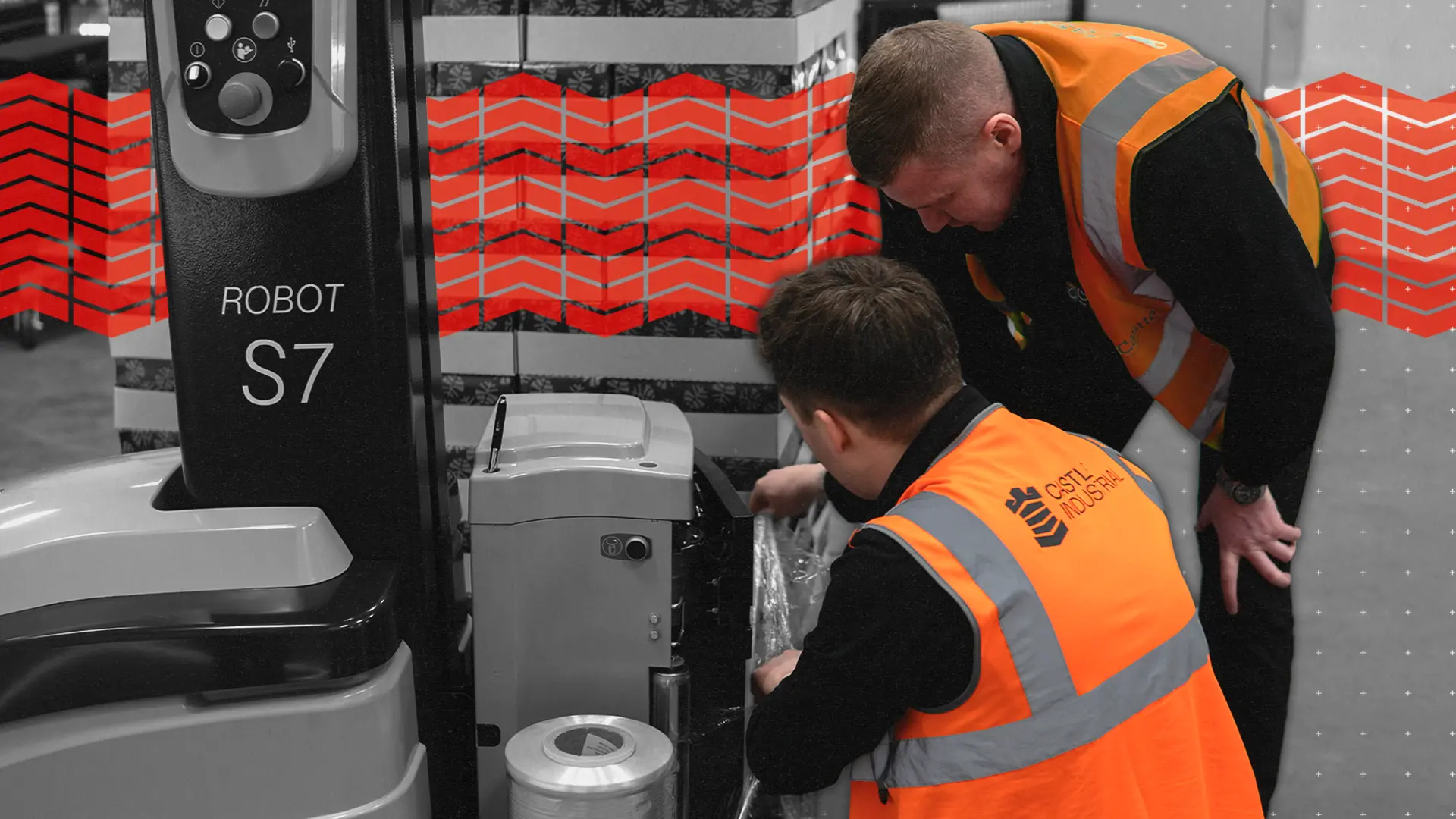
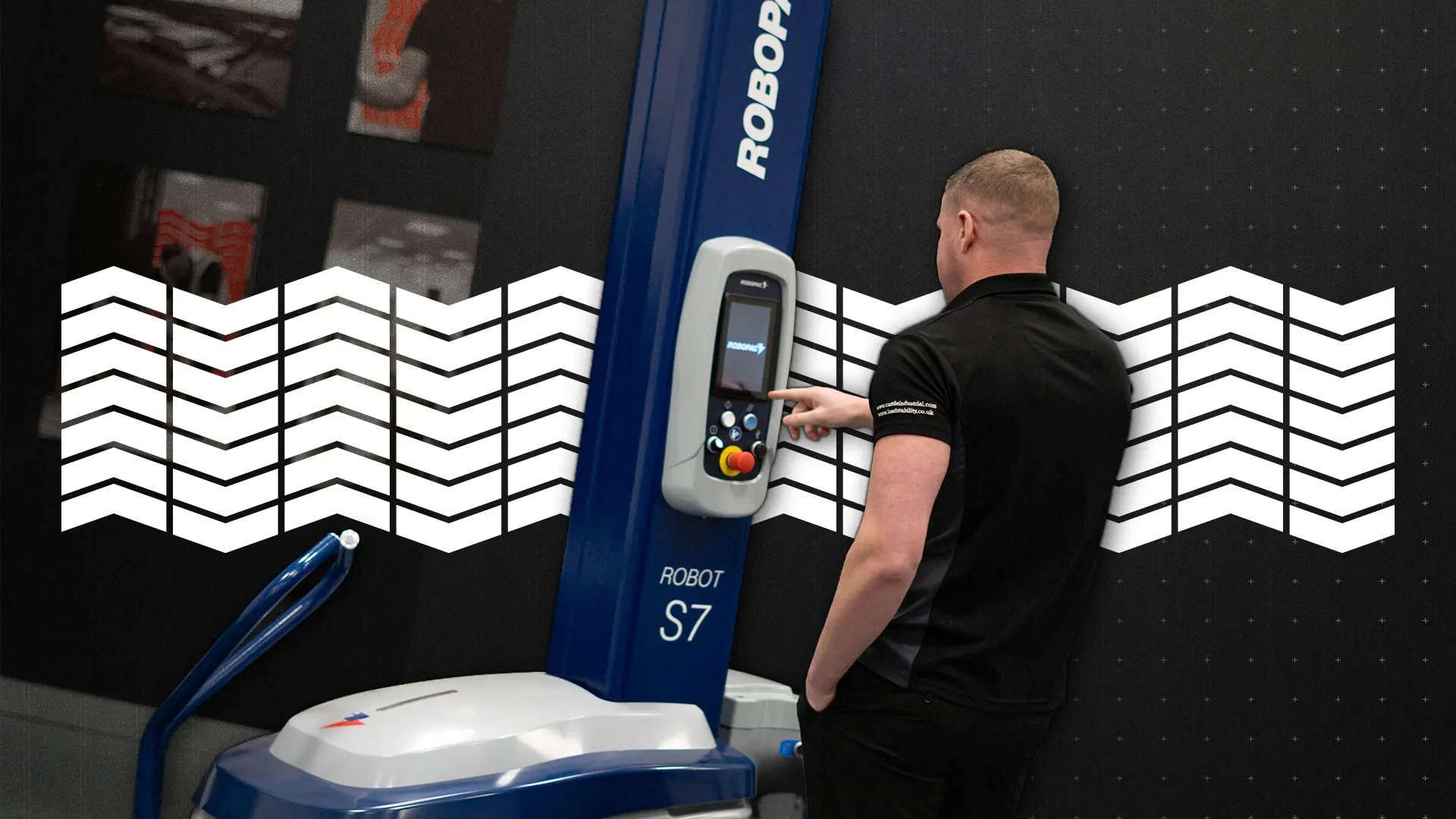
A mobile robotic wrapper moves freely around a stationary pallet, spiralling film up and around the load. With no fixed footprint required, these machines are ideal for large floor areas, irregular load shapes, or operations where flexibility and portability are a priority.
Rotating Ring Wrappers
A rotating ring wrapper passes the pallet through a fixed vertical ring that spins the film around it as it moves along a conveyor. With no rotating platform and no moving arm, this format is well suited to high-speed automated lines handling a continuous flow of pallets.
PALLET WRAPPER CARRIAGE SYSTEMS
The carriage is the component that controls film tension and stretch. Getting this right for your load type and throughput is the most important technical decision in choosing a pallet wrap machine.
Mechanical Brake (Fixed Gear) Carriages
Mechanical brake carriages are the simplest and most affordable configuration. They create tension by applying friction to the film roll as it unwinds. Because they do not pre-stretch the film, consumption is higher, and stretch levels vary based on the load’s resistance. This can make consistency difficult across different product types.
Best suited to: Heavy, uniform loads that generate sufficient pull to create reliable tension, and for operations where standardising film usage is less of a priority.
Limitation: Mechanical brake systems are not well-suited to light or unstable loads, where insufficient tension can leave film under-stretched and containment force compromised.
Fixed Pre-Stretch (Standard Machine Wrapping)
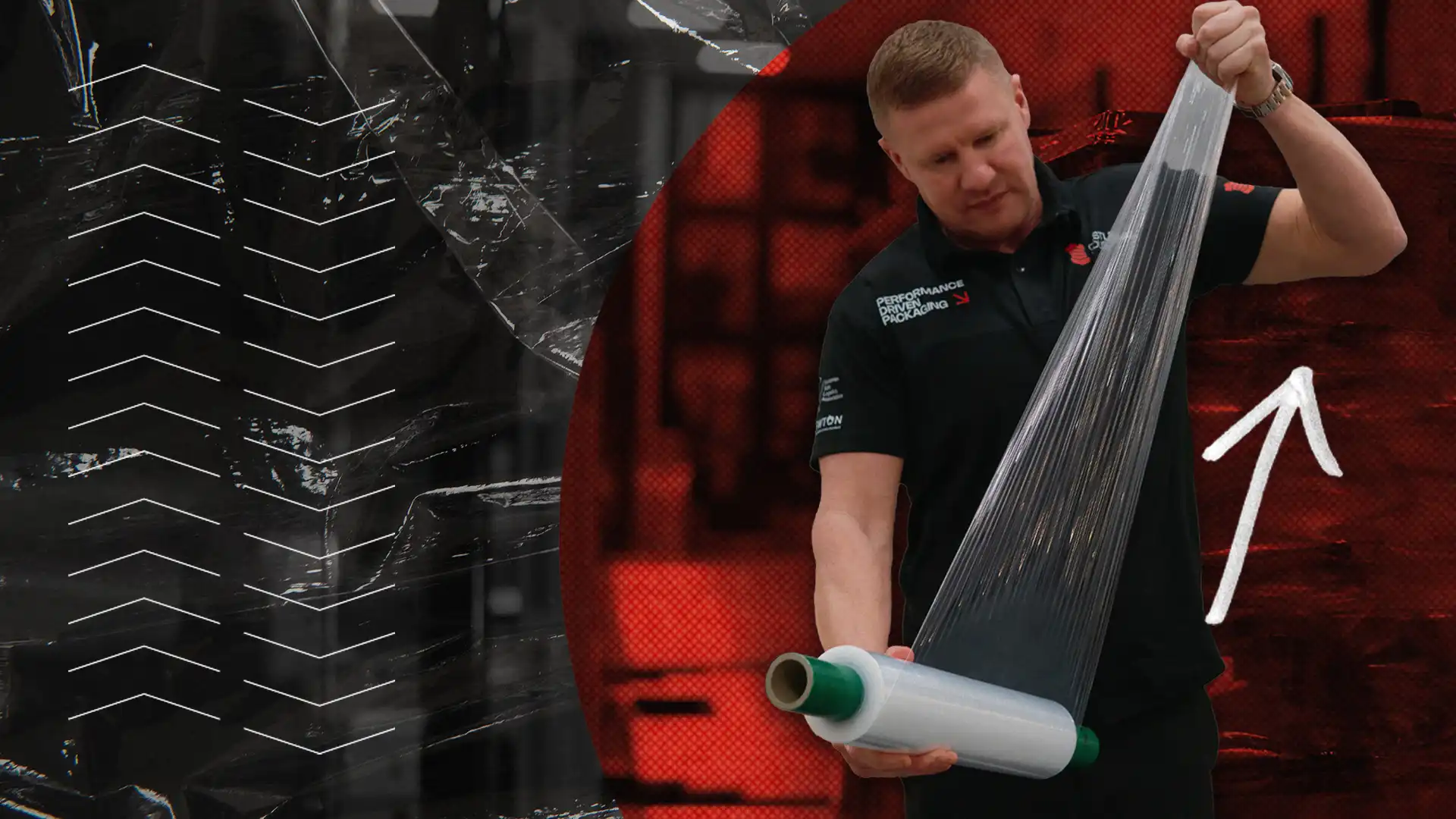
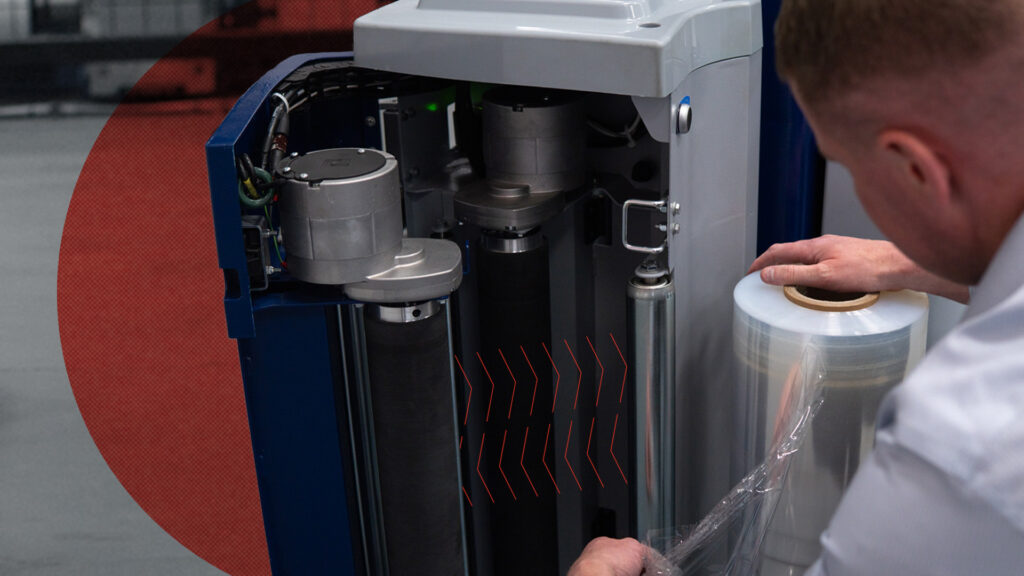
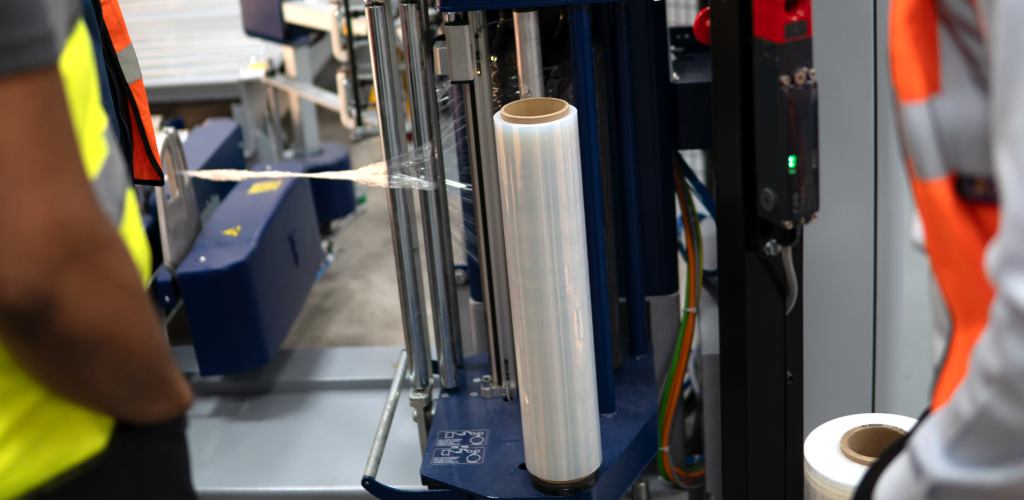
Fixed pre-stretch systems use motors to elongate film by 200% to 250% before application. This creates consistent containment force regardless of the load’s movement, while using significantly less material. For most mid-volume warehouses, fixed pre-stretch offers the most practical and efficient upgrade from manual hand-wrapping.
Best suited to: Operations looking to standardise film consumption, reduce material costs, and improve load consistency across a defined range of product types.
Not sure how your current film usage compares to what a pre-stretch system could deliver? Get in touch for a film usage audit.
Variable Pre-Stretch (Advanced Applications)
Variable systems allow operators to digitally adjust stretch ratios for specific film types or fragile loads. You can even program custom tension curves, applying different forces to the base versus the top. This precision is essential when handling a wide range of products, or when using ultra-thin, high-performance films that require careful handling.
Best suited to: High-volume, mixed-product operations, or businesses using advanced film specifications where precise stretch control is a commercial or operational necessity.
It’s also worth noting that because pre-stretch requires a different wrapping technique (particularly around the reduced effort required during application) staff training can be very beneficial. Teams that are used to standard stretch film may initially over-tension pre-stretch wrap out of habit, which can affect results. A short period of proper onboarding goes a long way.
Whether your load type, correct application is critical. Take a look at our guide to common pallet wrapping mistakes and how to avoid them to make sure your team is set up for success from day one.
CHOOSING THE RIGHT PALLET WRAPPING MACHINE FOR YOUR OPERATION
To determine which pallet wrapper is best, consider what factors are most appropriate for your warehouse setup:
1. Warehouse Space and Layout
- Automatic turntable and rotating ring machines usually have a fixed footprint and need clear floor space.
- Rotary arm and robotic systems can be more compact or flexible in where they operate.
2. Budget and Total Cost of Ownership
- Fully automatic systems and advanced pre-stretch carriages carry higher upfront and maintenance costs.
- Simpler systems often have lower servicing requirements.
- Variable pre-stretch carriages can reduce film consumption over time, partially offsetting their higher initial cost.
3. Throughput and Cycle Time Needs
- If you’re wrapping pallets frequently or in high volumes, consider systems with high cycle speeds (e.g., rotating ring, automatic turntable with fast film carriage).
- If your demand fluctuates, semi‑automatic or robotic systems can offer flexibility without unnecessary speed capability that you won’t use.
4. Regulatory or Industry Requirements
- Some industries (such as pharmaceuticals and automotive) often have defined load containment standards. Machines with precise tension control and reporting features can help meet these compliance requirements.
- Higher‑end automatic systems can integrate with warehouse management systems (WMS) and provide wrap counts, film usage data, and diagnostics for audits or process reviews.
5. Operator Skill and Safety
- Semi-automatic machines typically have a lower initial learning curve.
- Fully automatic systems require less day-to-day intervention but more expertise for setup and troubleshooting.
- Machines with better ergonomic film loading and tensioning reduce strain.
- Safety features (e‑stops, guard sensors) are especially important in automated systems.
6. Future Growth and Scalability
- If you expect your throughput or product mix to increase, modular systems or machines compatible with conveyors can grow with your operation long-term.
- Forklift clearance, aisle width, and overall material flow should all be factored into machine placement decisions.
IS IT TIME TO PUT DOWN THE HAND-WRAP?
It’s important note that while machine wrapping has many benefits, there is no blanket rule for whether hand or machine wrapping is ‘best’.
If you manage a warehouse that hand-wraps ten pallets a day, machine pallet wrapping is probably not the right solution. Hand-wrapping is a legitimate, cost-effective method for lower-volume operations, and in many setups it’s the most appropriate way to get goods out the door.
However, if staff are covering ground they should not have to, wrap quality varies shift to shift, or your throughput has simply outpaced what a manual process can reliably deliver, machine pallet wrapping could be a serious contender.
To Buy or To Rent?
One of the most common barriers to upgrading a wrapping operation is the upfront cost of machinery. A mid-range turntable wrapper with fixed pre-stretch can represent a meaningful capital investment, and for many operations, committing before confirming the operational impact feels like a significant risk.
Renting a pallet wrapping machine is a practical way to evaluate real-world impact before committing. It removes the capital expenditure barrier, allows you to assess throughput improvements, film consumption, and operator uptake in your own environment, and gives you a clearer basis for any eventual purchase decision.
Castle offers both pallet wrapper rental and pallet wrapper sales, allowing you to choose the commercial model that fits your current position.
THE CASTLE APPROACH:
MAKING THE TRANSITION PROPERLY
Selecting the right machine is one thing. Ensuring it is correctly calibrated for your loads, your film, and your team is another. A pallet wrapper running at the wrong stretch ratio, or with an ill-suited carriage for your product type, will not deliver the consistency or efficiency gains that justify the switch.
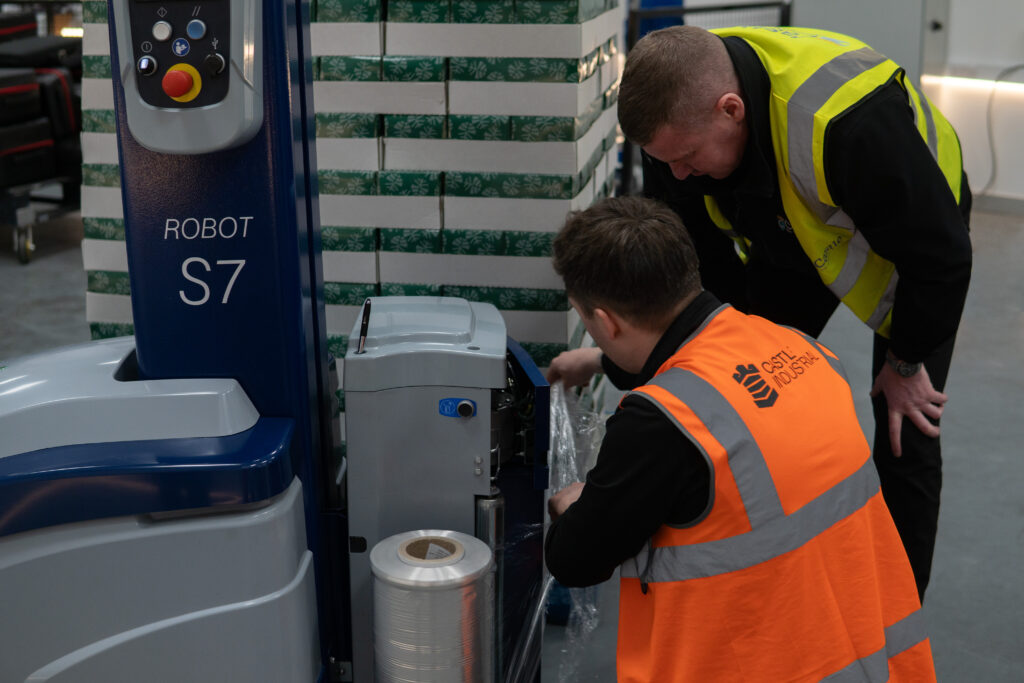
Castle’s technicians conduct on-site wrapping audits, assess your load types, and ensure any new machinery is set up correctly from day one. That kind of hands-on support is often the difference between a smooth operational upgrade and a machine that underperforms against expectations.
Validation Testing for Secure Pallet Wrappers
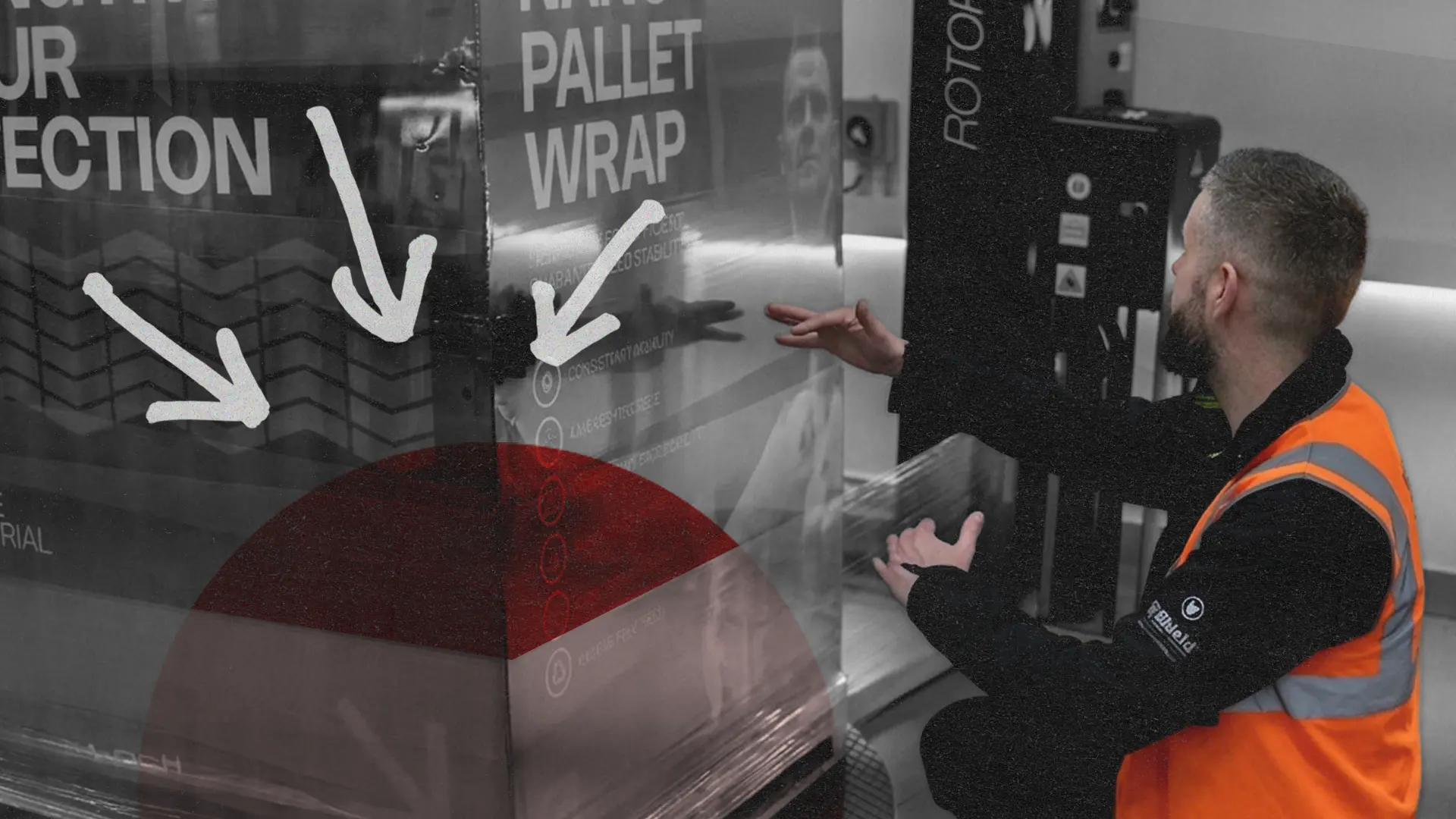
We also offer access to our Test Centre, the only load stability test centre of its kind in the UK, where you can see machines running with your own products before you make any commitment. This kind of personalised testing provide a level of confidence no brochure can replicate.
If you are considering a move to machine wrapping and want to make that decision on the basis of evidence rather than assumption, book a session at our Test Centre and bring your own pallets for a real-world trial.
Guide to Pallet Wrapping Machines

Written by
What is Pre-Stretch Pallet Wrap?

Written by
Long-Term Pallet Wrap Storage: Expert Tips from the Warehouse

Written by
What Is Void Fill Packaging (and Does It Prevent Damage)?

Written by
What is The Safest Pallet Stacking Pattern

Written by
PPWR Regulation: How to Reduce Plastic and Maintain Load Stability

Written by
What is EPR? An Introduction to Extended Producer Responsibility

Written by
What is Stretch Film Memory?

Written by
Achieving the Rigid State with Stretch Film

Written by