


Table of Contents
Estimated read time: 20 mins
RISE OF ECO-FRIENDLY RECYCLABLE PALLET WRAPS
When it comes to the niche market of pallet wrap, those with recyclable content are certainly getting more than their fair share of attention. With the introduction of plastic packaging waste regulations, plastic packaging tax initiatives, and with many businesses prioritising plastic reduction in their operation, it’s no surprise that eco-friendly pallet wrap is starting to gain real momentum.
However, as this momentum and pressure for recycled pallet wrap grows, decision makers still need to consider an important question: is switching to recyclable pallet wrap the right move for my business?
In this article we’ll explore the nuts and bolts of recyclable wrap, weigh up the pros and cons of making the switch, and providing you with practical tips for making a smooth transition.
IS PALLET WRAP RECYCLABLE?
Every day, businesses use thousands of metres of stretch film to ensure pallets stay stable and protected. But can it be recycled?
Traditional stretch film is made from linear low-density polyethylene (LLDPE). It’s cost-effective, widely available, and proven to be robust enough to stabilise loads in a variety of conditions. And while LLDPE is technically recyclable, many standard wraps aren’t easy to recycle through conventional waste streams in practice.
In fact, if your pallet wrap is soiled, labelled, or mixed with other types of plastic, it often heads straight to landfill – with the UK producing approximately 2 million tonnes of plastic packaging waste each year.
Eco-Friendly Alternatives to Traditional Stretch Film
In response, more companies are developing stretch films made from recycled plastic content, promising to reduce plastic waste without compromising on performance.
To create recyclable pallet wrap, manufacturers use recyclable content like post-industrial recycled materials (such as factory offcuts) or post-consumer recycled materials (such as collected and reprocessed pallet wrap).
TYPES OF RECYCLABLE PALLET WRAP
Recyclable pallet wrap isn’t just about what happens when you throw it away, it’s about using recycled materials right from the start. There are different types of recyclable pallet wrap, each with their own properties, performance benefits, and recycled plastic content percentages:
Nano-Layer Film
Nano films are engineered to be thinner and lighter than many standard options, while maintaining the reliable strength and puncture resistance you expect from a high-quality wrap. This ensures your pallets stay secure during transport and storage, without increasing plastic consumption.
PIR Film (Post-Industrial Recycled Film)
PIR films like eco pallet wrap contain industrial waste (like plastic edge trimmings) which is recycled by the manufacturers. High-quality PIR films integrate recycled content without compromising performance or load stability, supporting circular economy principles while maintaining the quality and efficiency businesses demand.
PCR Film (Post-Consumer Recycled Film)
Post-consumer recycled (PCR) film contains recycled materials collected after a consumer has finished using a product, reducing virgin plastic demand. High performance PCR pallet wrap can maintain strong holding force and load containment while supporting circular economy principles. To learn more about recycled films, check out our guide on PCR vs PIR recycled content pallet wrap.
Pre-Stretch Film
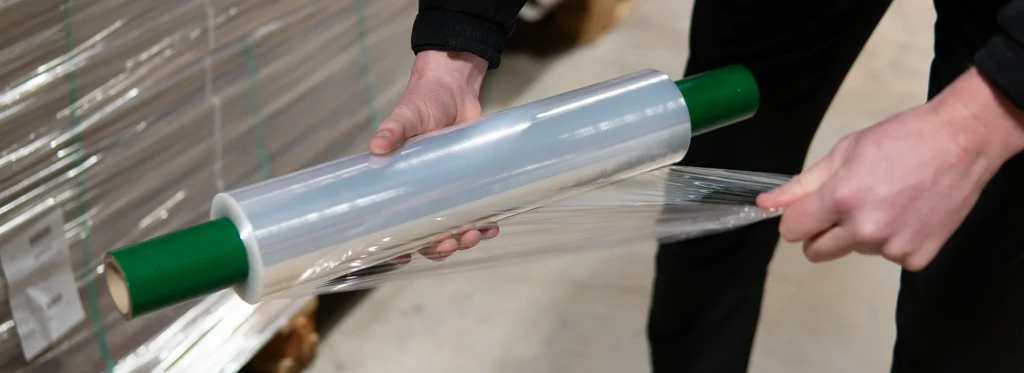
Pre-stretch film is mechanically stretched during manufacturing, reducing the effort needed during application. While it may not contain recycled content, pre-stretch film can be recycled after use. It also uses less material per pallet, lowering plastic consumption while maintaining excellent load stability. It’s ideal for pallet stabilisation without plastic film waste.
Cast Film
Cast film offers superior clarity and consistent cling properties, making it perfect for operations requiring load verification. This polyethylene pallet wrap is recyclable through standard facilities. Its smooth, quiet unwind and predictable performance make it efficient for high-volume wrapping applications.
Blown Film
Blown film provides exceptional tear resistance and puncture protection for irregularly shaped or heavy loads. Its robust construction ensures reliable pallet stabilisation without plastic film failure. While slightly noisier during application, blown film can be made from recyclable materials, and it can be recycled after use.
PALLET STABILISATION WITH REDUCED PLASTIC FILM
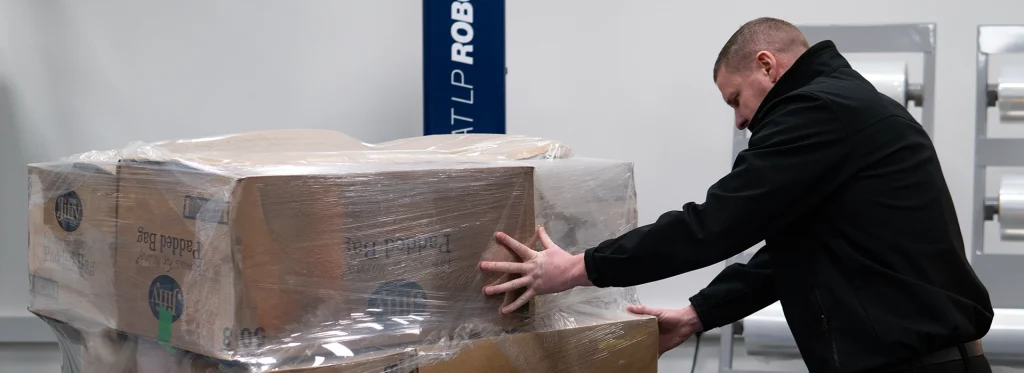
If you’re a warehouse manager, or even part of a procurement team, you’ll know that pallet wrap is a staple in securing goods for transport. After all, the main reason you use pallet wrap is to keep your goods secure.
Preventing Damage: If your film can’t hold the load tightly, you risk boxes shifting or even toppling in transit, leading to damaged goods.
Ensuring Safety: Pallets that shift can be hazardous to warehouse staff, forklift drivers, and delivery personnel.
Maintaining Efficiency: A collapsed pallet means extra labour, possible product losses, and shipping delays, none of which do your bottom line any favours.
Achieving load stability while reducing plastic is heavily influenced by the type of wrap you choose, the tension or stretch settings, and the technique used in wrapping. Properly applied, a recyclable film can get pretty close to the security of a more traditional wrap, if it’s engineered to the right specifications.
SHOULD YOU SWITCH TO RECYCLED PALLET WRAP?
Wondering whether recycled pallet wrap is the right move for your warehouse? Let’s talk through some of the pros and cons to help you decide whether it’s the right choice for your operation:
Cost Considerations
Let’s be honest: cost is often the first question on a procurement manager’s mind. Recyclable wrap can sometimes be a touch more expensive upfront, though this gap has shrunk as more producers enter the market. However, consider the bigger picture:
Waste Disposal Savings: If your recyclable film can be collected for reprocessing, you might pay less in general waste disposal fees.
Potential Rebates: Some recycling firms will pay a modest rebate for clean, recyclable film (especially if you can provide it in bales).
Long-Term ROI: When viewed alongside potential savings from reduced waste levies and improved brand image, the investment can balance out.
Environmental Goals
Switching to pallet wrap with recycled content is a straightforward way to reduce your environmental footprint. Many companies have corporate social responsibility (CSR) targets that include cutting down on single use plastics and opting for a film that can be partly reprocessed rather than purely landfilled can help meet those goals.
Plastic Packaging Tax
With the UK Plastic Packaging Tax charging £223.69 per tonne for low-recycled content films, switching to eco-friendly wraps doesn’t just cut down on virgin plastic usage, it can make financial sense too. By meeting or exceeding the 30% recycled threshold, operations can avoid extra costs and demonstrate your leadership in eco-conscious packaging.
Performance and Efficiency
A major concern is whether recyclable films match the tensile strength and load-holding capabilities of traditional films. Modern recyclable films are often designed to handle comparable stretch ratios, puncture resistance, and cling. You may need to adjust your machine’s stretch wrapping settings or train staff on slightly different wrap techniques, but in many cases, you’ll find the performance is on par.
Disposal and Recycling Infrastructure
While recyclable stretch film has the potential for a second life, that only happens if you can actually recycle it. Make sure you have access to facilities or partnerships that accept the type of film you plan to buy. Otherwise, even your new recyclable wrap might end up in landfill, negating the benefits.
SWITCHING TO RECYCLABLE PALLET WRAP: THINGS TO KNOW
Switching to recyclable pallet wrap isn’t always plug-and-play. Here are a few hurdles we’ve witnessed over the years and how you can handle them more effectively:
Machine Compatibility
- Some recyclable wraps may require adjusting your pre-stretch level or tension settings.
- Work closely with your film supplier to identify the right parameters and train your operators to avoid snapping or under-stretching the film.
Staff Training
- Warehouse staff are often pressed for time, and a quick, sloppy wrap can lead to load instability.
- Brief your team on the importance of correct wrapping techniques. A few extra minutes now can prevent major issues later.
Storage and Baling
- If you want to recycle effectively, you’ll need a system for collecting, compacting (where possible), and storing used film.
- Ensure it’s kept free from contamination like excess dirt, moisture, or mixing with other plastics, which can all reduce recyclability.
Quality Assurance
- Before you go all-in, it’s wise to run a pilot programme.
- Pick a couple of product lines to wrap with the recyclable film and measure outcomes like damage rates, wrap consumption, and ease of recycling.
We’ve tested recyclable wraps in some pretty tough conditions, and they’ve held up brilliantly. If you apply them with the right tension settings, in some cases they can be every bit as reliable as standard film. It’s a win-win for load stability and reducing plastic waste.
BEN THOMPSON
TECHNICAL MANAGER
STARTING USING RECYCLABLE PALLET WRAP IN YOUR OPERATION
Switching to recyclable pallet wrap offers a host of potential benefits, from cutting down on landfill waste to meeting CSR targets and enhancing your brand’s eco-credentials.
Before rolling it out across your operation, we recommend testing your new recyclable film to ensure you maintain load stability, minimise waste, and get the most value from your investment:
- Speak to Your Supplier: Ask about recyclable film options that suit your budget and machine setup.
- Plan a Pilot Test: Test a small percentage of your shipments to confirm performance and gather feedback.
- Evaluate Your Recycling Facilities: Make sure you have a reliable means of collecting and processing used wrap.
- Monitor and Adapt: Keep a close eye on damage rates, staff usage, and overall costs to fine-tune your approach.
With careful testing and implementation, switching to recyclable pallet wrap can be a strategic move for sustainability, cost efficiency, and operational reliability. It’s a win for both your business and the environment.
Not sure how a recyclable pallet wrap will perform in your operation? Test it under real-world conditions at our load stability test centre.
What Is Void Fill Packaging (and Does It Prevent Damage)?

Written by
What is The Safest Pallet Stacking Pattern

Written by
PPWR Regulation: How to Reduce Plastic and Maintain Load Stability

Written by
What is EPR? An Introduction to Extended Producer Responsibility

Written by
What is Stretch Film Memory?

Written by
Achieving the Rigid State with Stretch Film

Written by
Cutting-Edge Load Stability Techniques That Will Lower Your Packaging Expenses

Written by
How to Find the Right Pallet Wrap for Your Warehouse

Written by
Recycled Pallet Wrap: Post-Consumer vs. Post-Industrial Waste

Written by