



Back to blog
RECYCLED PALLET WRAP: POST CONSUMER VS POST INDUSTRIAL
Written by
LIAM BLAND
Load Stability
Table of Contents
Estimated read time: 22 mins
INTRODUCTION
Many businesses switch to “recycled” pallet wrap expecting to improve sustainability, only to find performance issues, inconsistent results, or uncertainty over whether they’ve actually made the right choice.
The problem usually isn’t the film itself. It’s the terminology.
Post-consumer recycled (PCR) and post-industrial recycled (PIR) pallet wrap are often grouped together, despite offering very different benefits in terms of performance, consistency, and environmental impact.
In this guide, we break down post-industrial vs post-consumer recycled pallet wrap, and how to choose the right solution for your warehouse operation.
WHAT IS RECYCLED CONTENT PALLET WRAP?
Put simply, recycled-content pallet wrap is film made using plastic resins that have been reclaimed from previously used or unused material. The “recycled” portion can come from two main sources:
Post-Consumer Waste (PCW) – plastic materials that have already been used and discarded by consumers, then collected for recycling.
Post-Industrial Waste (PIW) – leftover plastic scrap or trimmings from manufacturing processes that are reclaimed instead of thrown away.
Both can be referred to by different names, commonly PCR (post-consumer recycled) and PIR (post-industrial recycled). But with unique strengths and weaknesses for both materials, it’s important to understand the difference.
POST-CONSUMER RECYCLED CONTENT IN PALLET WRAP
What is Post-Consumer Waste?
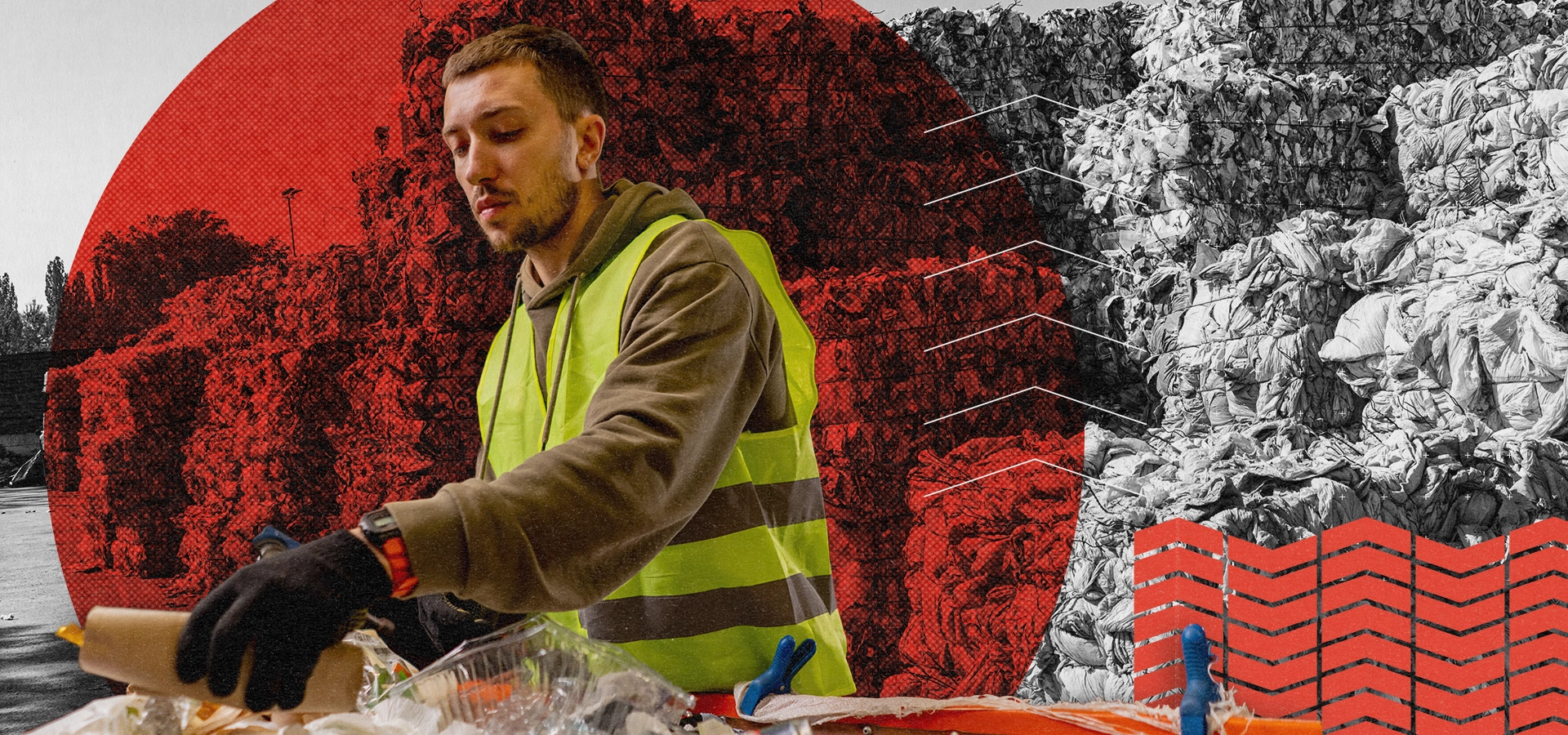
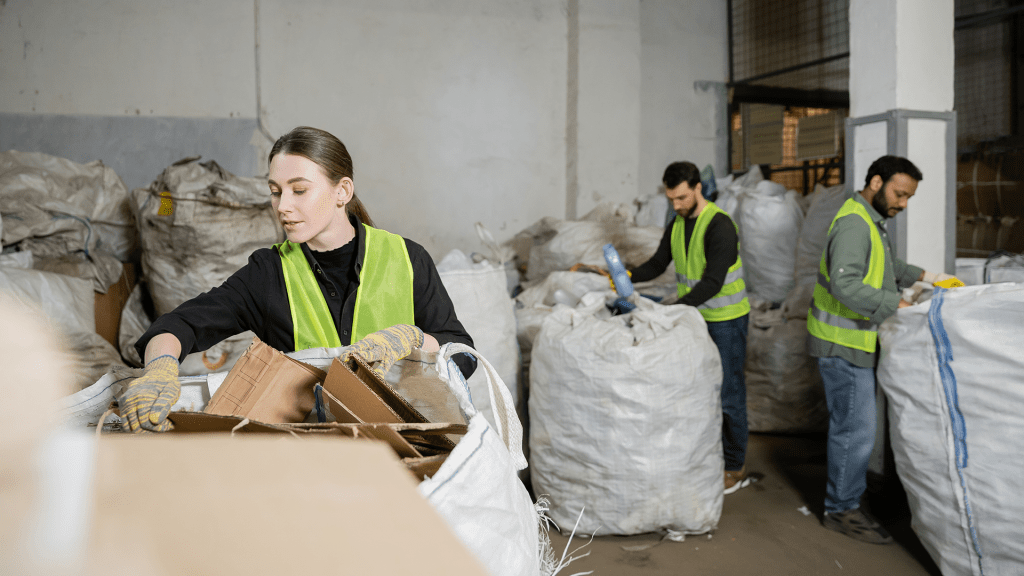
Post-consumer waste is the plastic material collected after a consumer has finished using a product. For instance, think of all those plastic bottles in household recycling bins, or shrink wrap from retail packaging that gets sent to a recycling facility. These materials are then cleaned, processed, and turned into resin pellets to be used in new products – like pallet wrap.
Key Benefits of Post-Consumer Waste
High Environmental Impact: Preventing more plastic from ending up in landfill.
Consumer-Friendly Story: For a strong sustainability message, using a film with a higher percentage of PCW (post-consumer waste) often resonates with customers.
Supports Circular Economy: Play a direct role in giving used plastic a second life.
Potential Challenges
Quality Variations: Because it comes from a range of sources, PCW can introduce greater variability in resin quality. This can affect consistency in film characteristics, like stretchability and tear resistance.
Contamination: PCW may contain impurities (e.g., different types of plastic), which require thorough sorting and cleaning.
If you’re set on using a high percentage of PCW in your stretch film, it’s crucial to partner with reputable suppliers, like us, who can demonstrate reliable sourcing and stringent quality controls.
POST-INDUSTRIAL RECYCLED CONTENT IN PALLET WRAP
What Is Post-Industrial Waste?
Post-industrial waste is generated during manufacturing – for instance, the plastic edges trimmed off during film production, or start-up material that doesn’t meet quality specs.
Instead of discarding this waste, manufacturers recycle it right there in the factory, turning it back into resin that can be used to make new films.
Key Benefits of Post-Industrial Waste
Consistent Quality: Since PIW comes from a controlled environment, it’s often cleaner and more uniform compared to post-consumer waste.
Less Contamination: It’s usually easier to sort and process, as the manufacturer knows exactly what kind of plastic is being reintroduced.
Efficient Use of Resources: PIW recycling can be seen as an immediate loop—plastic re-enters the production line with minimal handling and transport.
Potential Challenges
Limited Availability: PIW is dependent on factory processes. If manufacturing becomes extremely efficient with minimal waste, the amount of PIW might reduce.
Market Fluctuations: The supply of high-quality PIW can fluctuate based on production schedules and global manufacturing activity.
WHAT’S THE DIFFERENCE BETWEEN POST-INDUSTRIAL VS POST-CONSUMER RECYCLED CONTENT?
Performance Considerations
Both PIW and PCW can be formulated into stretch film that offers adequate load stability. In many cases, manufacturers blend PCW and PIW together, or add virgin material to fine-tune performance characteristics. Some key aspects to comparing recycled pallet wrap include:
Film Strength: PCW-based wraps might have slightly less tensile strength if the recycled content isn’t consistently high quality, whereas PIW-based wraps tend to have a more predictable performance.
Clarity: Visibility through the wrap can be important for product identification. PCW films may appear cloudier if they contain mixed recycled resins.
Elongation: A film’s ability to stretch before breaking is crucial for load containment. PIW films might offer a more consistent stretch profile.
- Recycled Resin Pricing: The market for recycled plastics can fluctuate, influenced by demand, oil prices, and regulatory changes.
What Are the Environmental Benefits of PIR vs PCR?
Post-consumer recycled plastics play a critical role in diverting waste from landfill and the natural environment, supporting circular economy for plastics goals.
Meanwhile, post-industrial recycled plastics helps minimise waste in the manufacturing process but do not address the disposal of plastics already in circulation at the consumer level.
Does Recycled Content Count Towards Plastic Packaging Tax?
There is often an element of confusion surrounding PIW or PIR films, and if they allow businesses to bypass the UK’s Plastic Packaging Tax. Despite what you might have heard, the UK Government’s guidance on taxing recycled plastic content largely depends on how it’s being re-processed.
For example, repelletising plastic so it can be used as a raw material will likely be classified as recycled plastic, while shredding scrap plastic to manufacture a similar product may not. To find out more, check out our comprehensive guide on the UK Plastic Packaging Tax.
Which Is More Sustainable: PIR or PCR?
Ultimately, both options are preferable to using 100% virgin materials, and many suppliers are adopting blends to balance their needs.
A lot of warehouse managers wonder if a film with recycled content can really match the performance of brand-new wrap.
But the truth is, with the right formulation, you’re not losing any strength or stretch – and some blends can actually outperform traditional films while also helping cut down on plastic waste.
The real trick is finding the perfect balance of recycled content that meets your specific load stability needs.
BEN THOMPSON
TECHNICAL MANAGER
WHICH PALLET WRAP IS BEST: PCR VS PIR?
Choosing the right recycled-content pallet wrap is about striking a balance between environmental commitment and reliable load stability.
Ultimately, your decision will hinge on factors like load type, performance requirements, budget, and corporate sustainability targets. If you’re a warehouse manager or procurement professional, start by setting clear goals for recycled content, do your homework on suppliers, and always trial new films before rolling them out across your operations.
For lighter, uniform loads, PCR-based pallet wrap can perform very well when correctly specified. These loads typically place less strain on the film, making them well suited to higher recycled-content blends that prioritise environmental impact.
For heavier, taller or more unstable loads, consistency becomes critical. PIR films often offer more predictable stretch, tensile strength and tear resistance. In these cases, PIR (or a blended PCR/PIR film) may provide greater confidence in load stability, particularly during long-distance or multi-drop transport.
There’s no one-size-fits-all answer. The right choice depends on your load characteristics, wrapping process and sustainability objectives, which is why testing under real transport conditions is essential.
FREQUENTLY ASKED QUESTIONS
WHat's the Difference Between PCR and PIR Recycled Pallet Wrap?
PCR (post-consumer recycled) wrap is made from plastic that has already been used and recycled by consumers, while PIR (post-industrial recycled) wrap comes from clean manufacturing offcuts. Both reduce reliance on virgin plastic, but they differ in consistency, availability and environmental impact.
Does Recycled Pallet Wrap Perform As Well As Virgin Film?
Yes, when correctly formulated and specified, recycled-content pallet wrap can match the strength, stretch and puncture resistance of virgin film. Performance depends on resin quality, blending ratios and how well the film is matched to the load.
How Do I Choose the Right Recycled Pallet Wrap for my Warehouse?
The right choice depends on load weight, stability, transport conditions and sustainability priorities. Many warehouses use blended PCR/PIR films to balance environmental impact with consistent performance, testing films on real loads is the best way to validate suitability.
FINAL THOUGHTS
The most effective way to make the right choice is through correct load set up. By testing films under real transport conditions, you can validate performance, reduce film usage and ensure your sustainability goals don’t compromise load security.
If you’d like expert guidance, our load stability specialists are here to help.
INSIGHTS
What is Plastic Packaging Tax?

Written by
What is EPR? An Introduction to Extended Producer Responsibility

Written by
WHY DOES MY PALLET WRAP SNAP?

Written by
Should You Switch to Recyclable Pallet Wrap?

Written by
What is Stretch Film Memory?

Written by
What is EPR? An Introduction to Extended Producer Responsibility

Written by
Cutting-Edge Load Stability Techniques That Will Lower Your Packaging Expenses

Written by
How to Find the Right Pallet Wrap for Your Warehouse

Written by
Recycled Pallet Wrap: Post-Consumer vs. Post-Industrial Waste

Written by