
Back to blog
THE DIFFERENCE BETWEEN SHRINK WRAP AND STRETCH FILM
Written by
BEN THOMPSON
Load Stability
PACKAGING
Table of Contents
Estimated read time: 25 mins
INTRODUCTION
Choosing between shrink wrap and stretch film isn’t just a packaging decision, it’s a load stability decision. Get it right, and pallets arrive intact, operations run efficiently, and costs stay under control. Get it wrong, and the results can be costly.
In fact, with an estimated 11% of palletised shipments arriving damaged in transit each year, shrink and stretch wrap performance directly impacts how much it really costs over time.
In this guide, we break down shrink wrap vs stretch film in practical, real-world terms. Find out how each film works, where each performs best, and how to choose the right option for your products, pallets, and logistics environment, so you can make a confident, informed decision.
WHY THE RIGHT FILM MATTERS
Pallet wrap plays a pivotal role in the logistics chain by protecting goods; whether that’s from environmental factors, tampering or stabilising goods during transport.
In warehouses and distribution centres, we regularly see damaged goods traced back to one issue: the wrong film being used for the application.
That’s why choosing the right film should never be about cost per roll. It’s about efficiencies, reducing damages and meeting the demands of the supply chain. All too often we see examples of choosing the short-term saving over the long-term benefits that make money and save far more.
So with that in mind, let’s take a closer look at the key differences between shrink wrap and stretch film.
STRETCH FILM VS SHRINK WRAP: WHAT’S THE DIFFERENCE?
The difference between stretch film and shrink wrap lies in how they secure products.
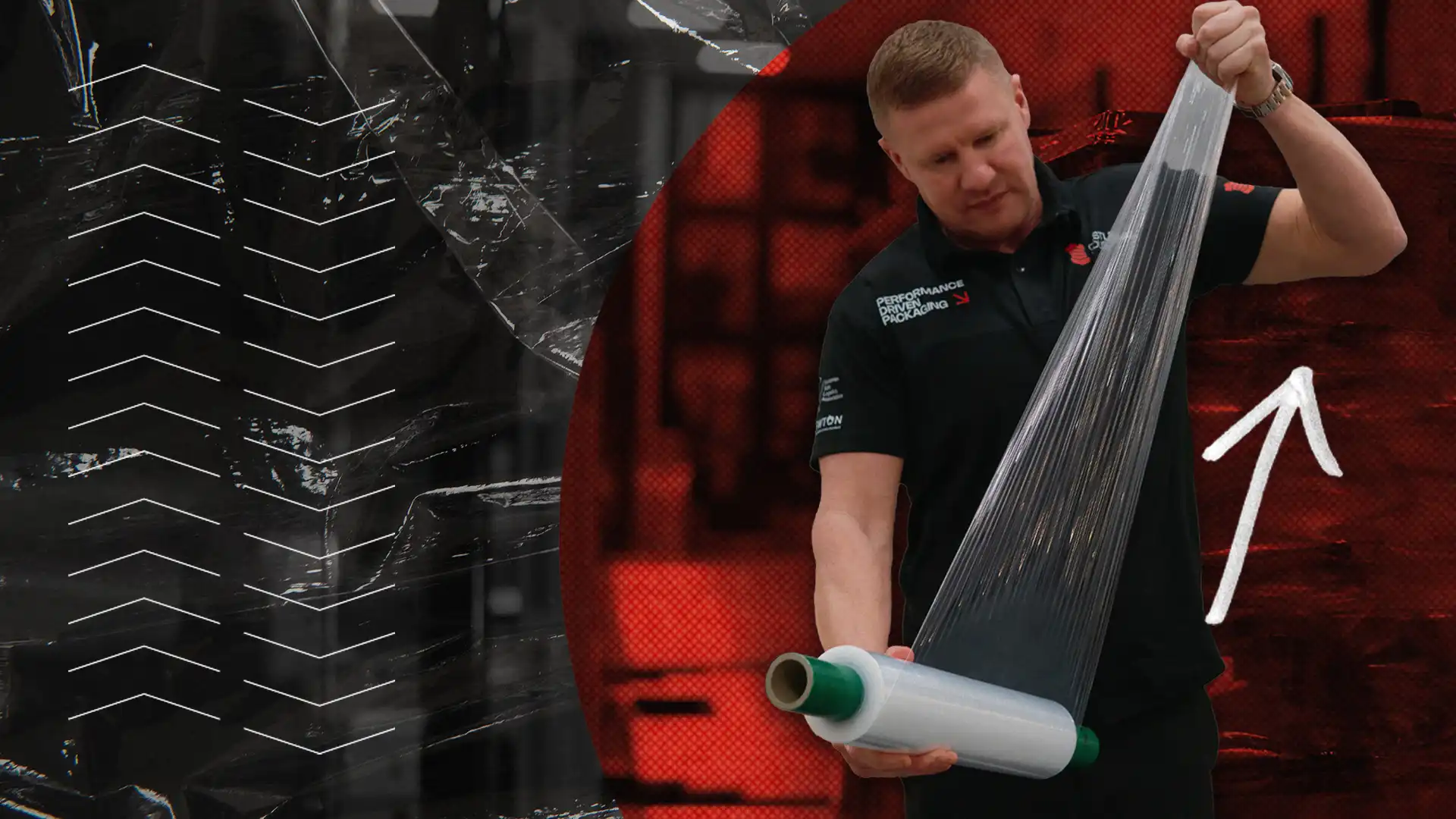
Stretch film is applied under tension and relies on elasticity to stabilise palletised loads, while shrink wrap is applied loosely and then heated so it shrinks tightly around a product.
Stretch film is most commonly used in warehouses and distribution centres to secure pallets, prevent load movement, and protect goods during transport, without the need for heat.
In short, stretch film is designed for load stability, while shrink wrap is designed for product presentation and sealing.
| Feature | Stretch Film | Shrink Wrap |
| Application method | Applied under tension | Applied then shrunk with heat |
| Heat required | No | Yes |
| Primary purpose | Load stability and containment | Product sealing and presentation |
| Best suited for | Pallets, heavy or irregular loads | Retail packs, multipacks, tamper evidence |
| Energy usage | Low | Higher (heat tunnels / guns) |
| Warehouse efficiency | High for bulk operations | Lower for pallet-scale wrapping |
HOW STRETCH FILM AND SHRINK FILM WORK
How Stretch Film Works
Stretch film can be applied either manually or using a machine. In both cases, the film is stretched around the pallet under controlled tension, creating a secure wrap, as the stretch film memory pulls it back towards its original size.
Machine stretch wrapping systems automate this process by rotating the pallet or the film carriage while applying a consistent, pre-set wrap force, improving efficiency and repeatability.
The resulting tension stabilises the load and reduces the risk of movement during transport. Many stretch films also feature cling on one or both sides, allowing the layers to bond together and further strengthen load containment.
How Shrink Wrap Works
Heat is crucial to the shrink wrap process. After the product is covered in shrink film, it is exposed to hot air (usually in a shrink tunnel or via a heat gun). The film’s polymer structure responds to heat by “shrinking,” tightly conforming to the product’s contours. This creates a secure, form-fitting seal that protects against dust, moisture, and tampering.
As mentioned, this method is particularly popular in industries where presentation matters and the product size or shape calls for a tight, protective seal.
KEY DIFFERENCES BETWEEN SHRINK WRAP AND STRETCH WRAP
1. Method of Application
- Shrink Wrap: Requires heat to shrink the film around the product.
- Stretch Film: Uses tension to secure the load, and no heat is required.
2. Performance and Load Stability
- Shrink Wrap: Creates a tight, form-fitting seal ideal for smaller retail items, but offers limited load stability for heavy or palletised loads without specialised equipment.
- Stretch Film: Provides strong pallet stabilisation through elasticity, making it more effective for securing large or irregular loads when applied with the correct wrap force.
3. Cost and Operational Considerations
- Shrink Wrap: Involves higher operational costs due to heat tunnels, ongoing energy use, and additional labour requirements for specialised machinery.
- Stretch Film: Typically requires lower capital and energy investment, with even automated systems consuming significantly less power than heat-based shrink wrapping.
4. Suitability for Specific Products
- Shrink Wrap: Best suited to smaller items, retail multipacks, and temperature-resistant products where presentation and tamper evidence are priorities.
- Stretch Film: Ideal for bulk goods, heavy pallets, and irregular loads that rely on tension to maintain stability during handling and transport
Shrink is most often employed as a secondary packaging measure, binding products together in multipacks. It can be used in bulk operations, but rarely is it efficient to do so. Particularly with the introduction of nano films, there’s little reason to look further than the stretch for palletised goods.
BEN THOMPSON
TECHNICAL MANAGER
WHAT IS STRETCH FILM?
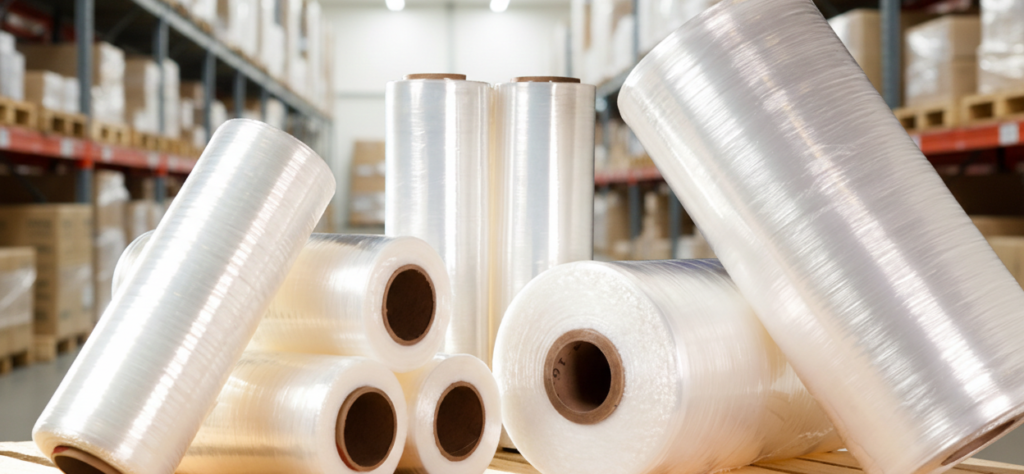
Stretch film, also called stretch wrap, is commonly made from linear low-density polyethylene (LLDPE). Designed to be pulled and stretched around a pallet or product load, this film’s elasticity creates tension to hold items together. Compared to shrink wrap, no heat is required, making it a more energy-efficient option for most warehouse environments.
WHAT IS SHRINK WRAP?
Shrink wrap is a film made from materials such as polyethylene, polyolefin, or PVC that, when heated, contracts around an item to form a tight seal.
How Industrial Shrink Wrap is Used
You’ve probably seen shrink wrap extensively in retail multipacks – think about those multi-packs of water bottles neatly bound together in a transparent film. It can also be used for larger palletised loads, but it’s more common for smaller items or for bundling products together in attractive retail packaging.
STRETCH FILM VS SHRINK WRAP: WHICH SHOULD YOU USE?
Wondering which wrap to use in your operation? Let’s take a look at some specific use cases.
Stretch Wrappers for Irregular Loads
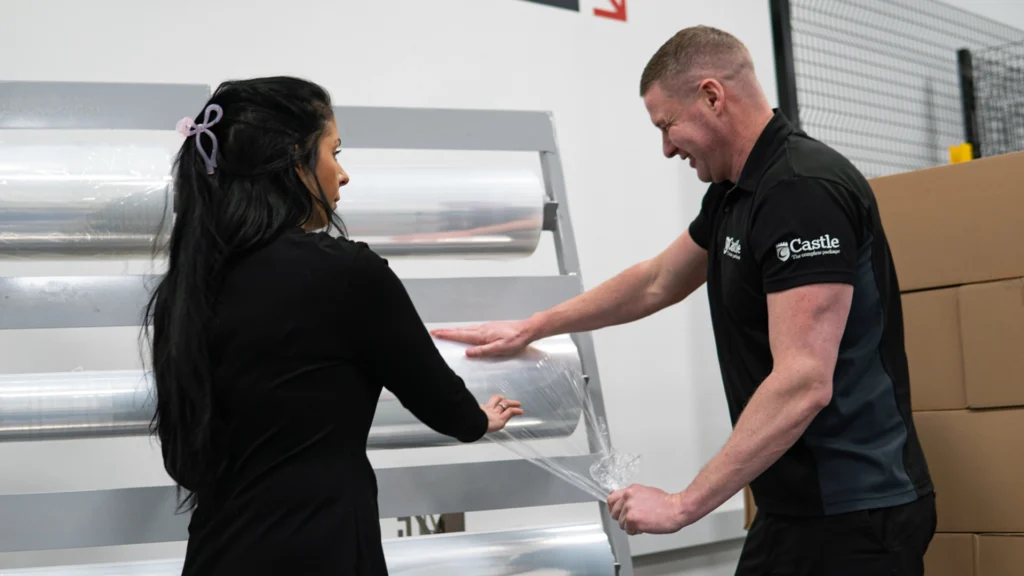
Manual stretch wrapping is effective for smaller operations or irregularly shaped loads where flexibility and operator control are important.
Stretch Wrapping for FMCG and High-Volume Packaging
Stretch wrapping is ideal for securing large, heavy, or tall pallets where load shifting is a major concern. Machine wrapping handles high volumes quickly and consistently, making it well suited to regular, repeatable loads common in FMCG environments. Its versatility means it works across a wide range of product types and industries.
Stretch Wrapping for Cold Storage and Temperature-Sensitive Loads
Stretch film is well suited to cold storage and temperature-sensitive products, as specialist films maintain elasticity and load stability without the need for heat. This makes stretch wrapping a safer option where heat application could damage products or compromise packaging performance.
When Shrink Film Is the Better Option
For many warehouses, stretch film is the go-to option for bulk logistics, particularly when shipping full pallets or preparing items for extended transit. However, shrink film may be the most effective solution in the following examples.
- Retail Presentation: Because it forms a neat seal, shrink wrap provides a clean, visually appealing look that is often used for consumer goods in stores.
- Tamper Evident: Once the film is shrunk, any attempt to open or alter the package will be noticeable, making it a good choice for products needing extra security.
- Dust and Moisture Protection: Items sealed in shrink wrap are protected from external contaminants.
- Versatility in Product Shapes: The film can conform to products with unique shapes, ensuring a snug fit that doesn’t shift during handling.
| Use case | Recommended film |
| Warehouses | Stretch film |
| Pallets | Stretch film |
| Retail products | Shrink wrap |
| Cold storage | Stretch film |
PRACTICAL TIPS FOR PROCUREMENT AND WAREHOUSE TEAMS
1. Evaluate Film Performance, Not Just Price
Don’t just compare the cost per roll; factor in equipment, labour, and potential product damage or returns.
Suppliers with consistent film quality (from thickness and tear resistance to cling properties) can reduce film breaks, inefficiencies, and prevent compromised load stability. Ask these questions when vetting a supplier:
- Do they provide technical data sheets or test results for their films?
- What’s their tolerance for variance in film thickness, length or clarity?
- Do they offer trial rolls or on-site demonstrations?
2. Match Film Choice to Your Warehouse Operations
Consider how fragile your products are and whether they can handle a certain level of tension (for stretch film) or heat (for shrink wrap). Temperature-sensitive products like chocolates or heat-sensitive electronics might be better suited to stretch film to avoid damage during the shrink-wrapping process.
Transport distances, handling frequency, and environmental exposures to your products are all important factors in your decision-making process too. If your loads will be moved multiple times, or if you’re shipping via long-haul or overseas routes, stretch film’s strong hold can often provide more resilience against shifting.
3. Work Trial and Testing into Your Buying Process
Never underestimate the importance of trial runs before you commit to a large-scale purchase. Load Stability Testing Centres can simulate real world transit conditions and discover the best option with your specific needs in mind.
4. Consider Your Sustainability Goals
With a growing focus on environmental impact, both shrink wrap and stretch film manufacturers are exploring ways to reduce plastic, including post-consumer and post-industrial pallet wraps, and manufacturing thinner films.
Often, stretch film is easier to recycle at certain facilities, though this can vary based on local regulations. Opting for thinner gauges and pre-stretched films can also help cut down on total plastic consumption.
5. Train Teams to Apply Film Correctly
Even the best film can fail if it’s incorrectly applied. Make sure your warehouse staff:
- Understand how to properly tension the film.
- Follow recommended wrapping patterns (e.g., starting at the base, overlapping layers).
- Use tools or machines safely and correctly.
For shrink wrap, ensure your team knows optimal heat settings, safety protocols around heat tunnels, and how to address film shrinkage inconsistencies.
FREQUENTLY ASKED QUESTIONS
Is Stretch Wrap the Same as Shrink Wrap?
No, stretch wrap secures loads using tension and elasticity, while shrink wrap uses heat to shrink tightly around products.
Is Shrink Film Cheaper Than Stretch Film?
Not usually, as shrink film typically involves high operational costs compared to stretch film.
Can Stretch Film Be Used in Cold Storage?
Yes, stretch film is ideal for cold storage because it’s designed to maintain elasticity and load stability in cold and frozen environments.
VALIDATE PALLET WRAP PERFORMANCE WITH REAL-WORLD LOAD TESTING
Shrink wrap and stretch film each have unique advantages, and the right choice comes down to your specific product requirements, logistics demands, budget, and sustainability goals.
Ultimately, whether you wrap pallets with heat or with tension, ensuring products arrive safely is the real bottom line. If you need more personalised guidance, reach out for a personalised load stability assessment.
Let’s work together to find the perfect film solution for your operation.
What Is Void Fill Packaging (and Does It Prevent Damage)?
Written by Ellie Chalmers
What is The Safest Pallet Stacking Pattern
Written by Ellie Chalmers
PPWR Regulation: How to Reduce Plastic and Maintain Load Stability
Written by Ellie Chalmers